
Plan your next large-format project
Tell us about your project, and our team will help you plan the right production approach.


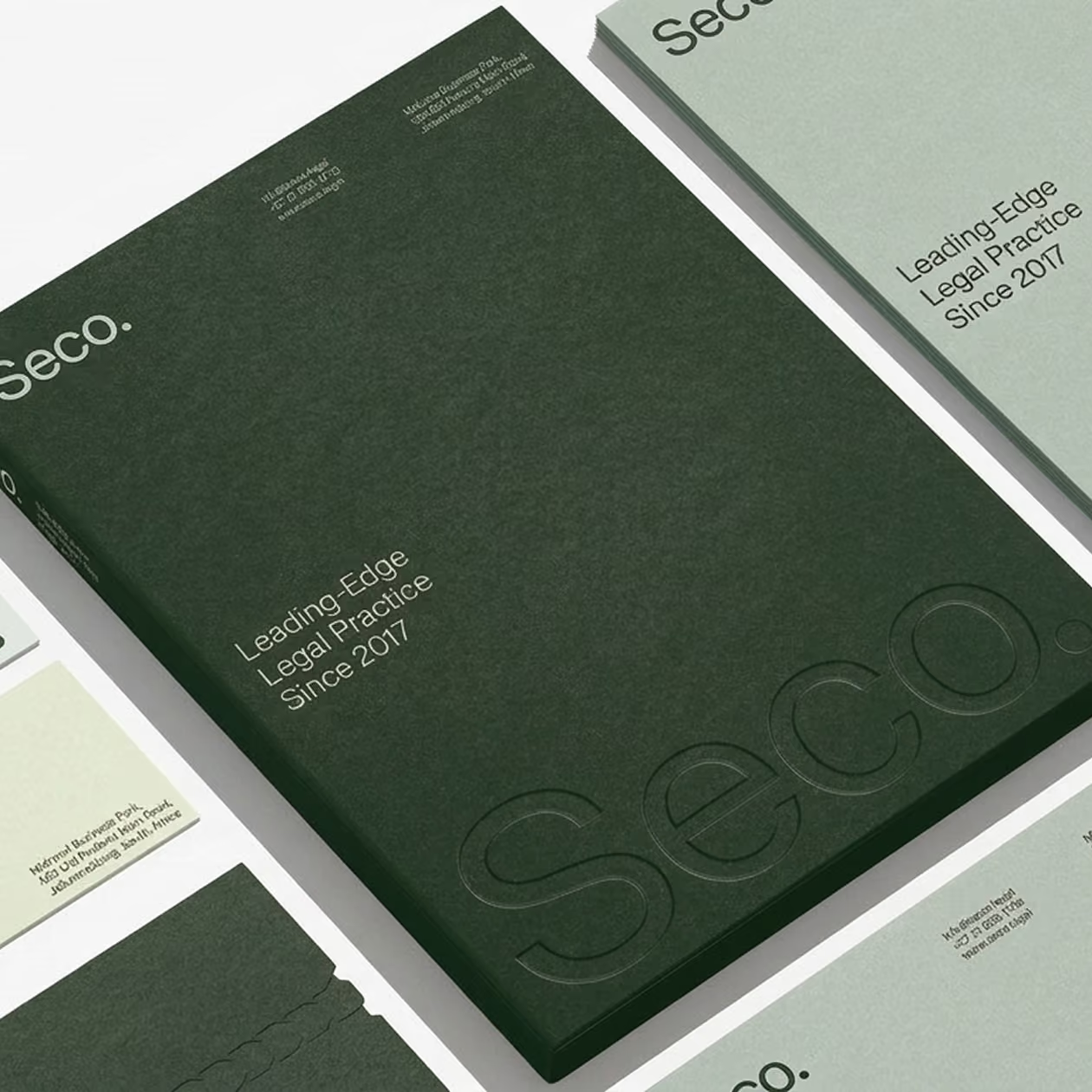
Whether it's a brochure or business card, we ensure consistent quality and color accuracy across all corporate identity materials for immediate brand recognition


Taking a relationship-first approach to printing, Leatherback ensures corporate identity materials are designed and executed with the highest standards to quality and consistency for immediate brand recognition
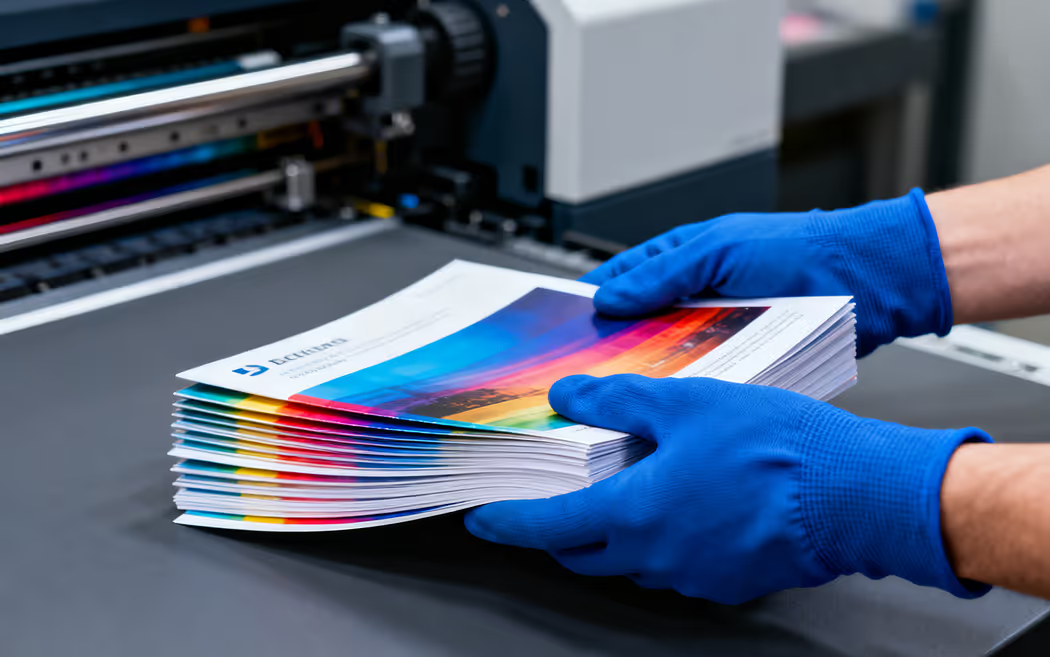
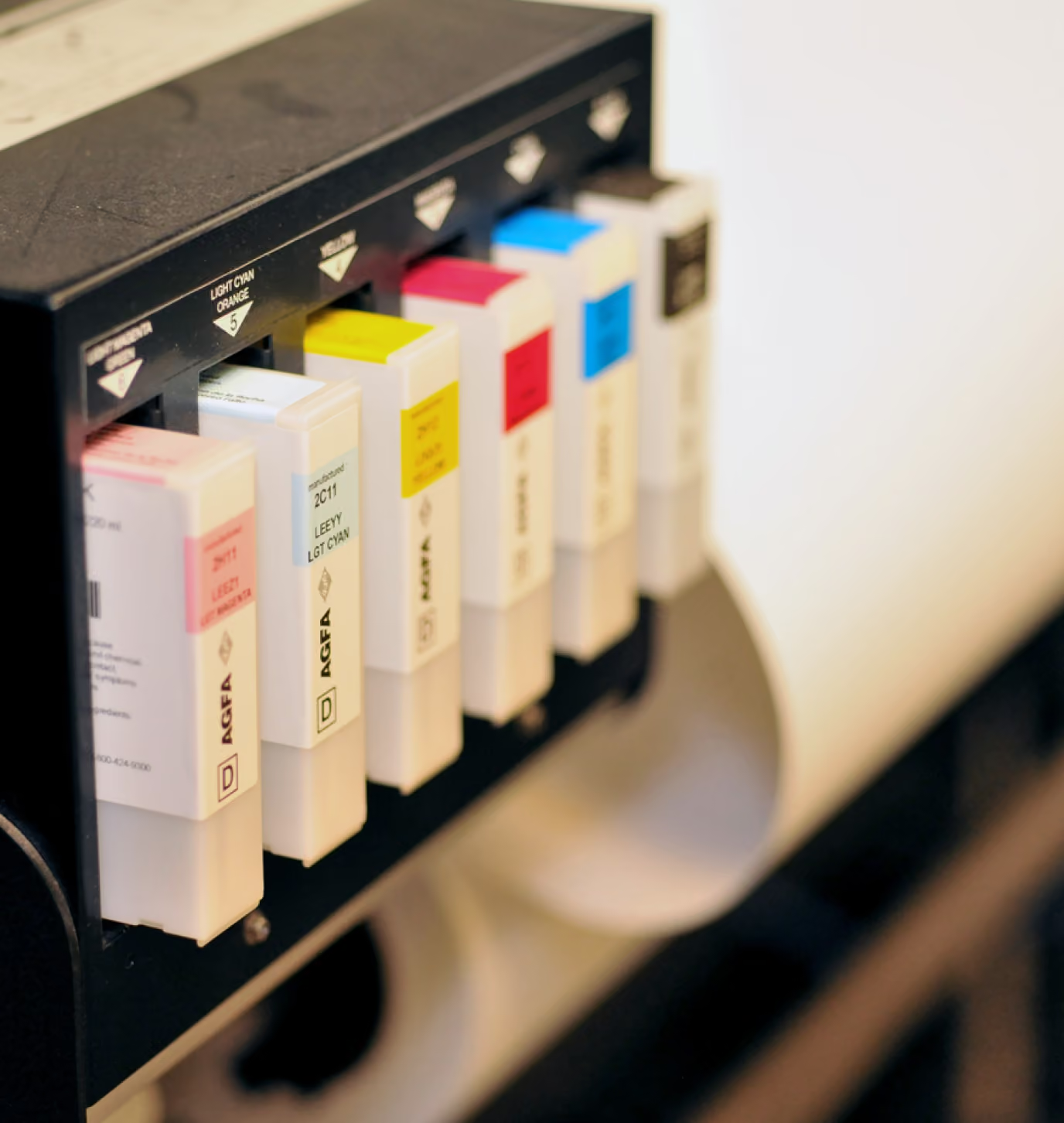
Our printing experts collaborate with your team to identify the right inks and substrates and ensure an exact color-match across all materials
Offering multiple in-house capabilities and 60+ years of proven experience, we provide:
Leatherback provides flexibility, customization and elevated image quality for short-run projects.

Ensuring consistent brand identity requires more than:
All printing and finishing is handled in-house to provide complete control and transparency at each step of the process
This guidance saves costs in the long-term and ensures each application performs perfectly in real-world conditions.
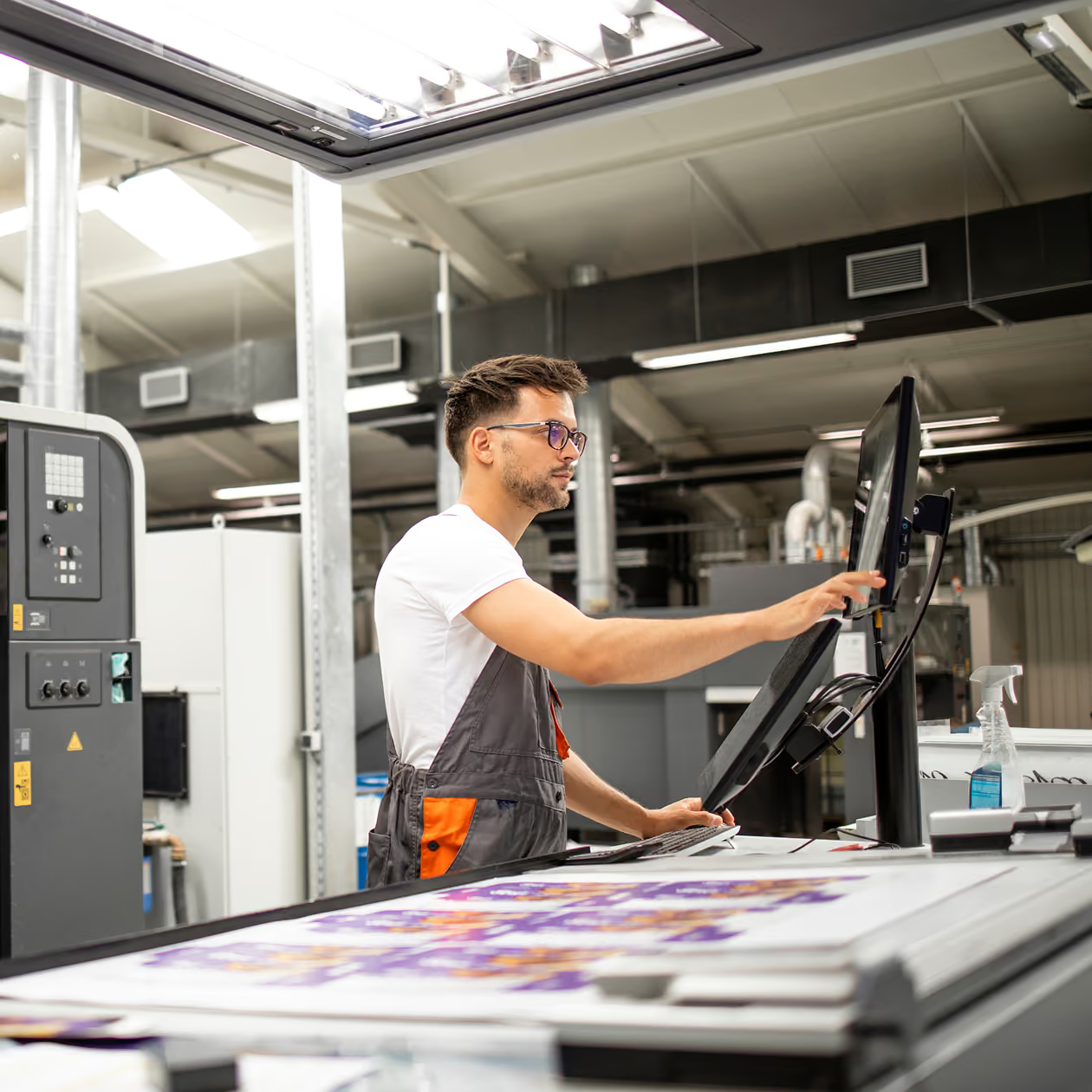
To maintain project precision and uniform results, our team manages color, materials, and production standards.
This approach reduces variation, ensures quality and results in high-quality corporate identity materials.
High-end offset printing for medium to large runs with sharp detail, stable color, and premium results across every sheet.
Perfect for short runs and variable data, digital printing delivers fast turnaround with exceptional color accuracy and consistency.
Fujifilm Acuity flatbed printing delivers precise, durable oversized graphics on rigid substrates with instant curing.
High-volume HP Latex roll-to-roll printing delivers vibrant, durable graphics on flexible media with fast turnaround.
HP Latex roll-to-roll printing delivers high-volume, vibrant graphics on flexible media with speed, durability, and sustainability.
Consistent and precise color reproduction using calibrated workflows to match brand standards across every print run.
Professional file preparation, proofing, and color correction to ensure flawless results before production begins.
A wide selection of paper stocks and specialty materials to achieve the exact aesthetics and performance your project requires.
Enhance your prints with coatings, laminations, folding, and other finishing techniques for a refined final product.
Leatherback fulfillment and logistics ensure accurate assembly, secure packaging, and reliable global delivery of print projects.
Real-time inventory tracking, accurate order fulfillment, and direct invoicing built for long-term print programs.
Reach out to us! We’ll guide you
every step of the way.
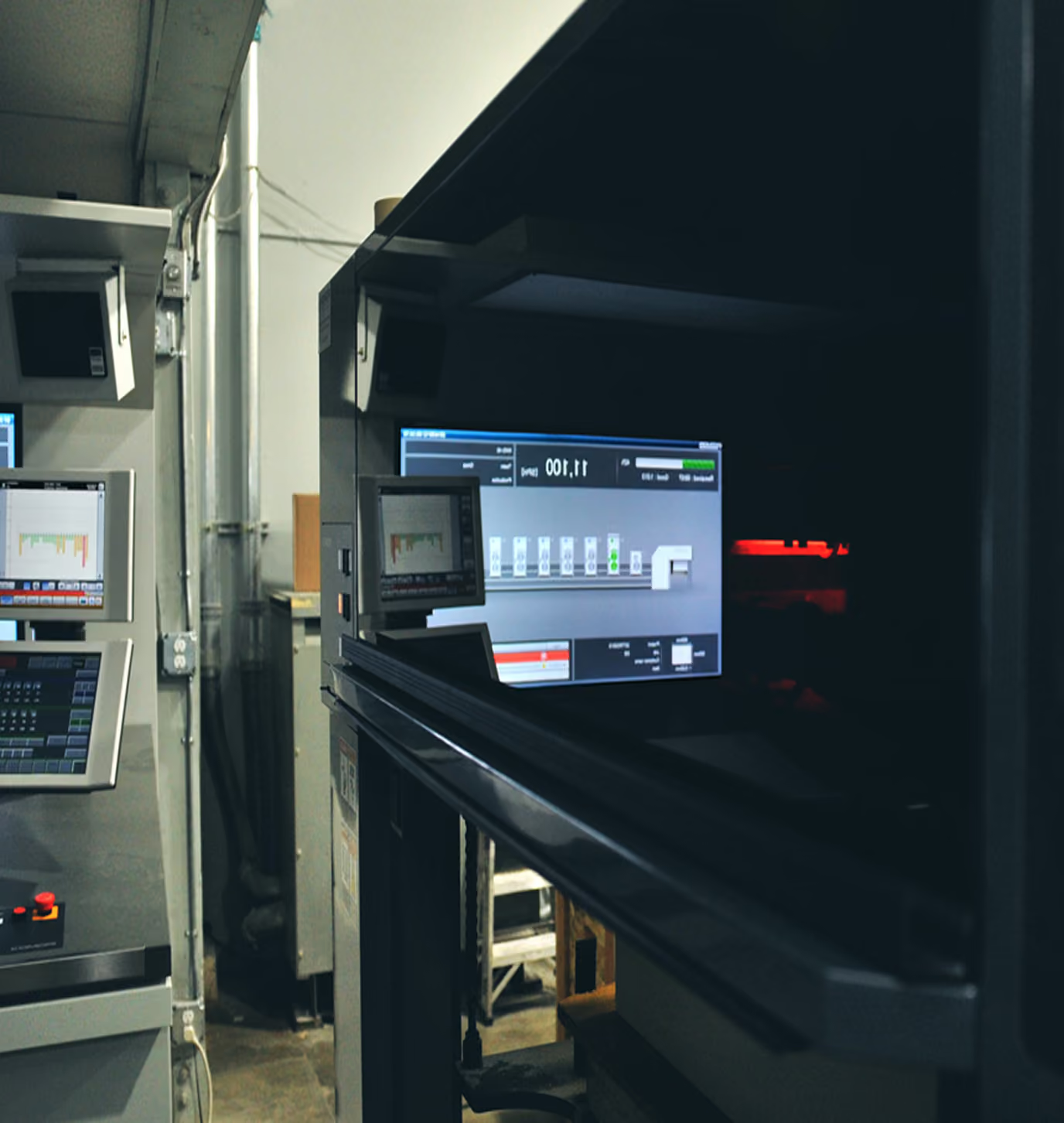
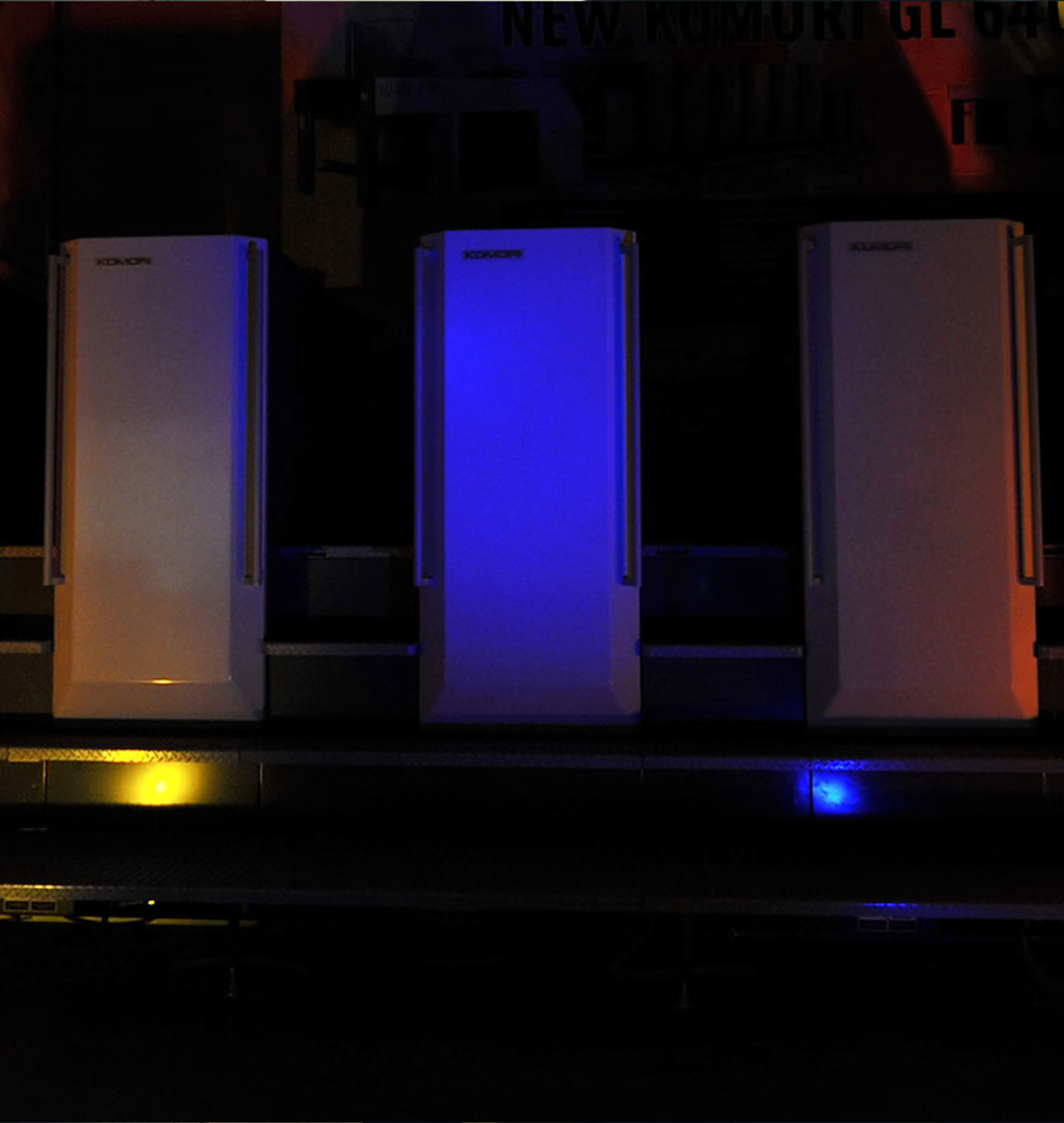
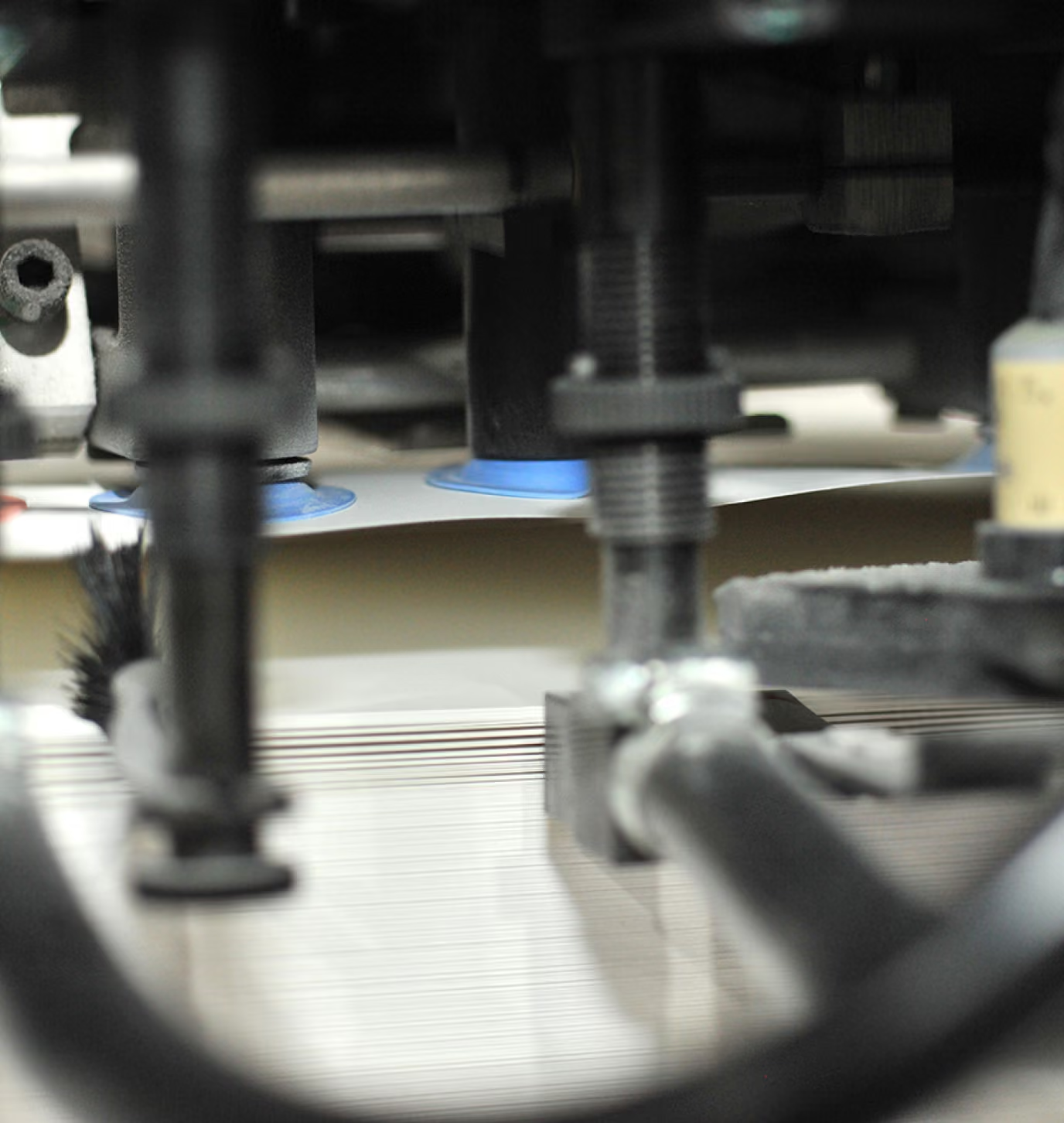
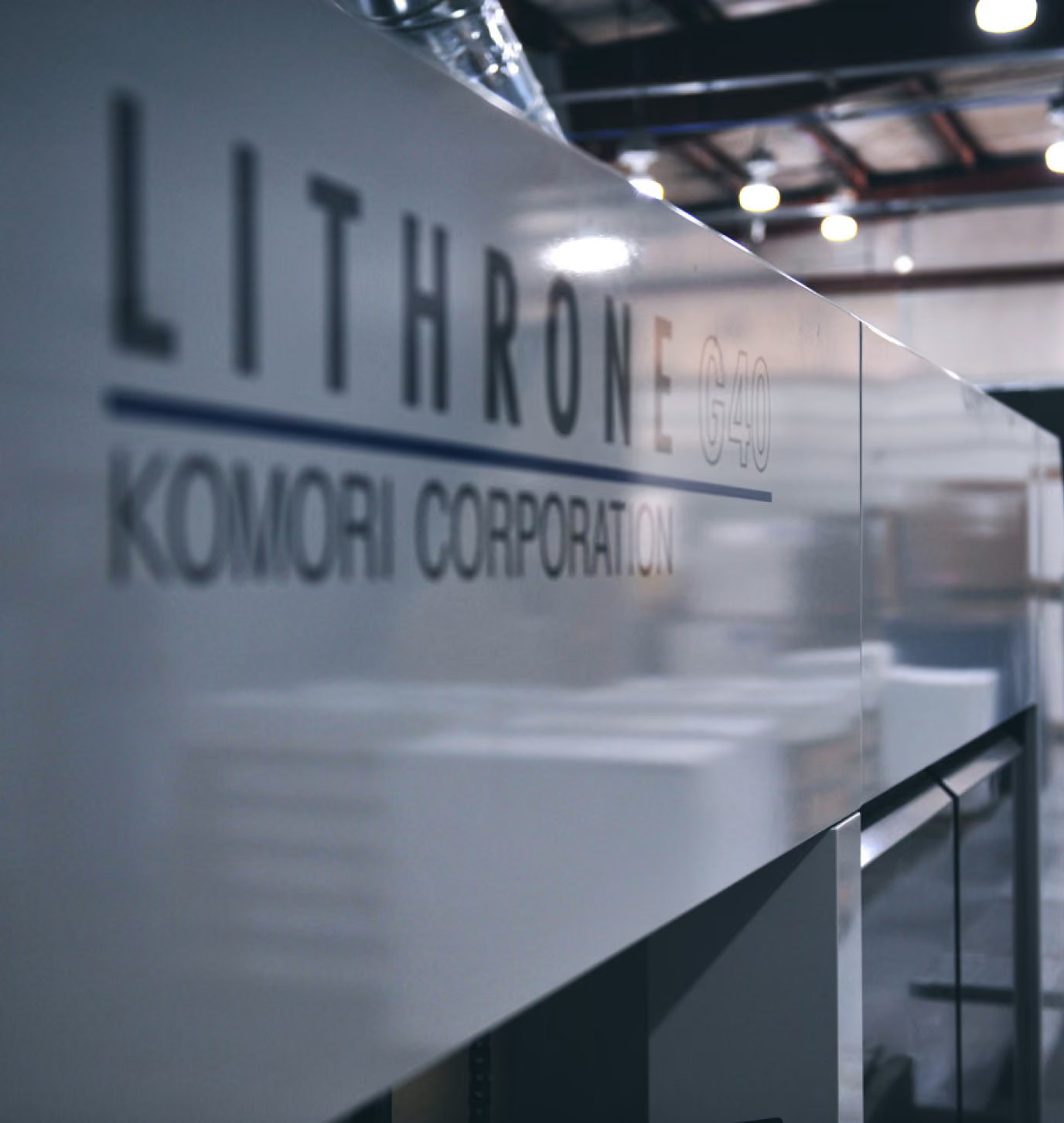
Leatherback’s Komori G40 is a 40-inch class sheetfed offset press is designed for high-volume commercial printing where speed, consistency, and inline production efficiency are critical. Built on Komori’s Lithrone platform, the G40 is engineered to handle long, static runs of brochures, catalogs, packaging components, and marketing collateral with exceptional print stability. Compared to digital presses, the G40 excels in applications where unit costs must be driven down over large volumes, delivering precise ink control, high sheet throughput, and uniform color reproduction across entire press runs. Its robust feeder and delivery systems, advanced automation, and compatibility with a wide range of coated and uncoated stocks make it well suited for demanding commercial environments
Operationally, the G40 stands out among offset presses through its support for inline processes such as die cutting, along with coating, drying, and other finishing enhancements. Inline die cutting allows printed sheets to be converted into finished or semi-finished products in a single pass, reducing handling, floor space requirements, and turnaround time compared to offline converting workflows. Versus smaller offset presses, the G40’s larger size improves imposition efficiency and reduces the number of sheets required per job, while its automation features reduce makeready time and operator intervention. While digital presses dominate short runs and variable content, the Komori G40 remains the preferred solution for printers who prioritize maximum productivity, durability, and the lowest possible cost per impression on high-volume jobs.
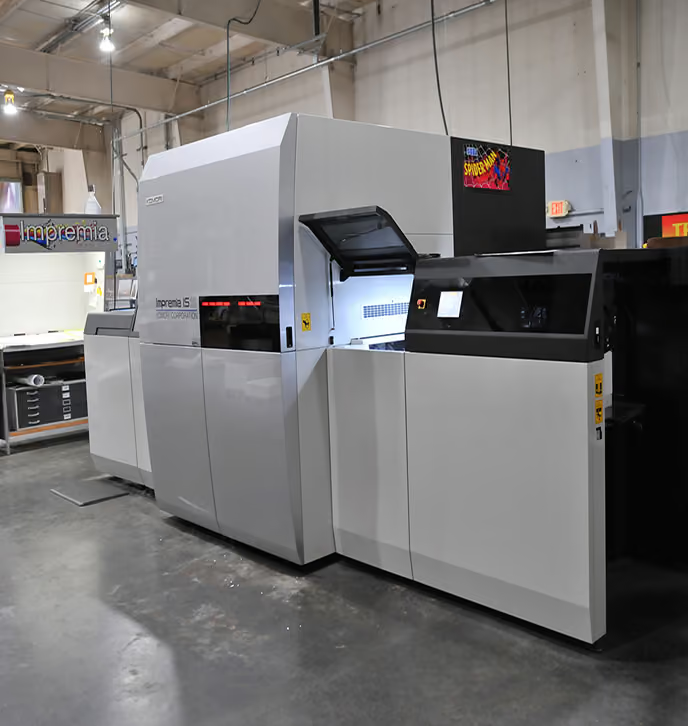
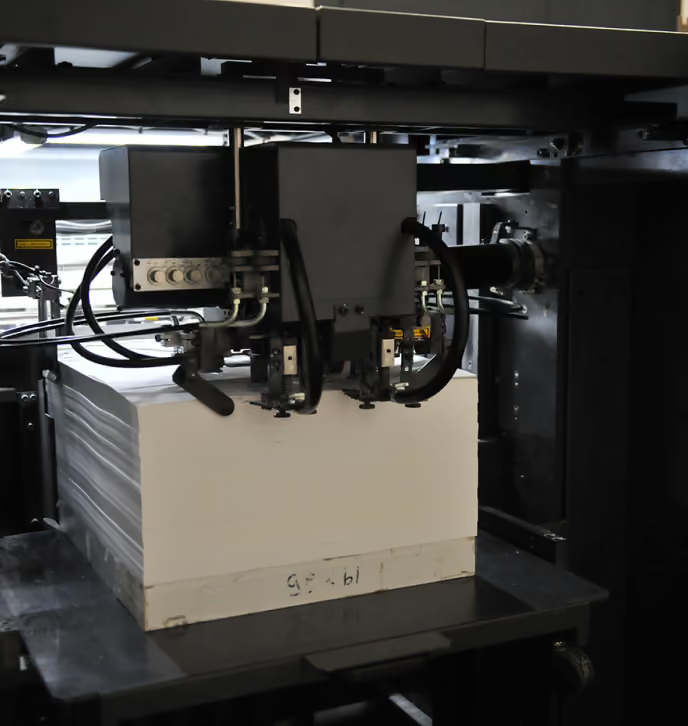
Leatherback’s Komori IS29 Impremia is a large production inkjet digital press built around a 23" × 29" (B2-class) sheet size, positioning it uniquely between traditional offset presses and smaller digital production devices. Unlike toner-based digital presses that top out around 13" × 19", the IS29 handles true commercial sheet sizes used for books, direct mail, packaging prototypes, and high-end marketing collateral. It uses water-based inkjet technology with offset-compatible substrates, enabling us to run coated and uncoated stocks similar to those used on a conventional Komori offset presses. Automated color control, inline quality monitoring, and advanced sheet handling allow consistent output at high speeds while maintaining short makeready times—an area where offset presses typically require more setup, plates, and waste before reaching sellable quality.
Operationally, the IS29 excels in environments where versioning, short runs, and fast turnaround are critical. Compared to offset, it eliminates plates and significantly reduces setup time, making it economical for jobs that change frequently or require personalization. Compared to smaller digital presses, its large sheet size improves imposition efficiency, reduces finishing steps, and supports products that simply cannot be produced on smaller sized digital presses. While offset remains superior for ultra-long, static runs, the IS29 delivers a hybrid advantage: offset-like substrate flexibility and sheet size with digital’s agility.
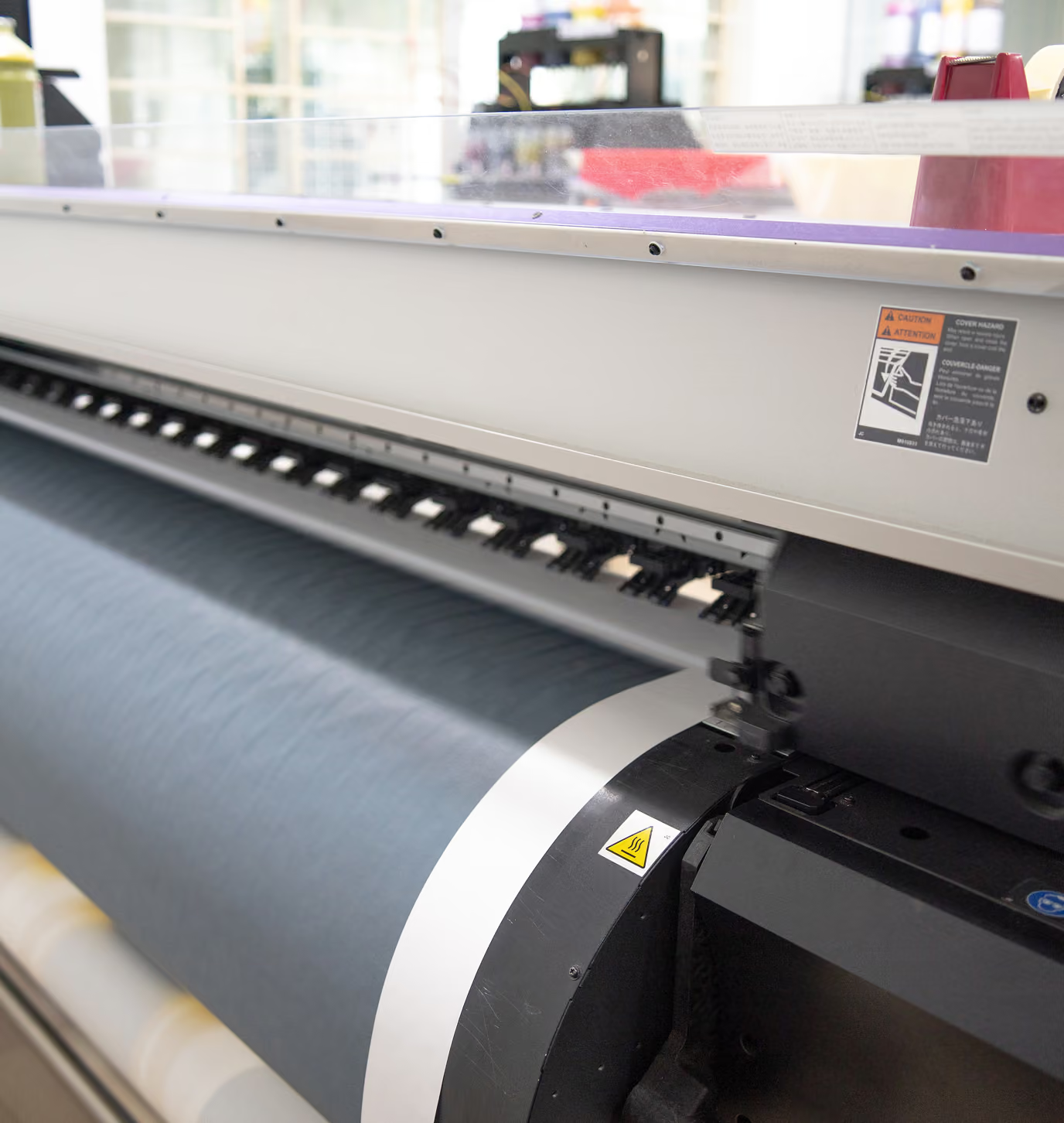
Leatherback’s Fujifilm Acuity digital flatbed press, designed for a maximum sheet sizeof 60" × 120", is built for high-productivity commercial and industrial printing environments where rigid media and oversized graphics are common. Leveraging UVor UV-LED curing inks, the Acuity platform enables direct-to-substrate printing with excellent color stability, fine detail, and instant curing for immediate handling. In our large format division, this press stands out for its ability to efficiently produce large signage, retail displays, packaging prototypes, and architectural graphics in a single pass—eliminating the need for mounting or laminating prints afterward. Its large vacuum table, precision registration, and multi-zone workflow support help maintain accuracy even on heavy or non-traditional materials.
Compared with roll-to-roll or hybrid large-format presses, the Acuity flatbed excels in substrate flexibility and thickness handling. It can print on a wide array of materialsincluding corrugated board, foam board, acrylic, PVC, aluminum panels, wood, glass,styrene, and coated papers—often up to several centimeters thick depending on configuration. While roll printers are optimized for flexible media and long runs, the Acuity flatbed shines in short-to-medium runs, customization, and rigid applicationswhere durability and precision matter. Its consistent output, minimal setup time, and compatibility with automation options (such as loading systems or white ink layers)position it as a versatile production centerpiece among large-format digital presses.
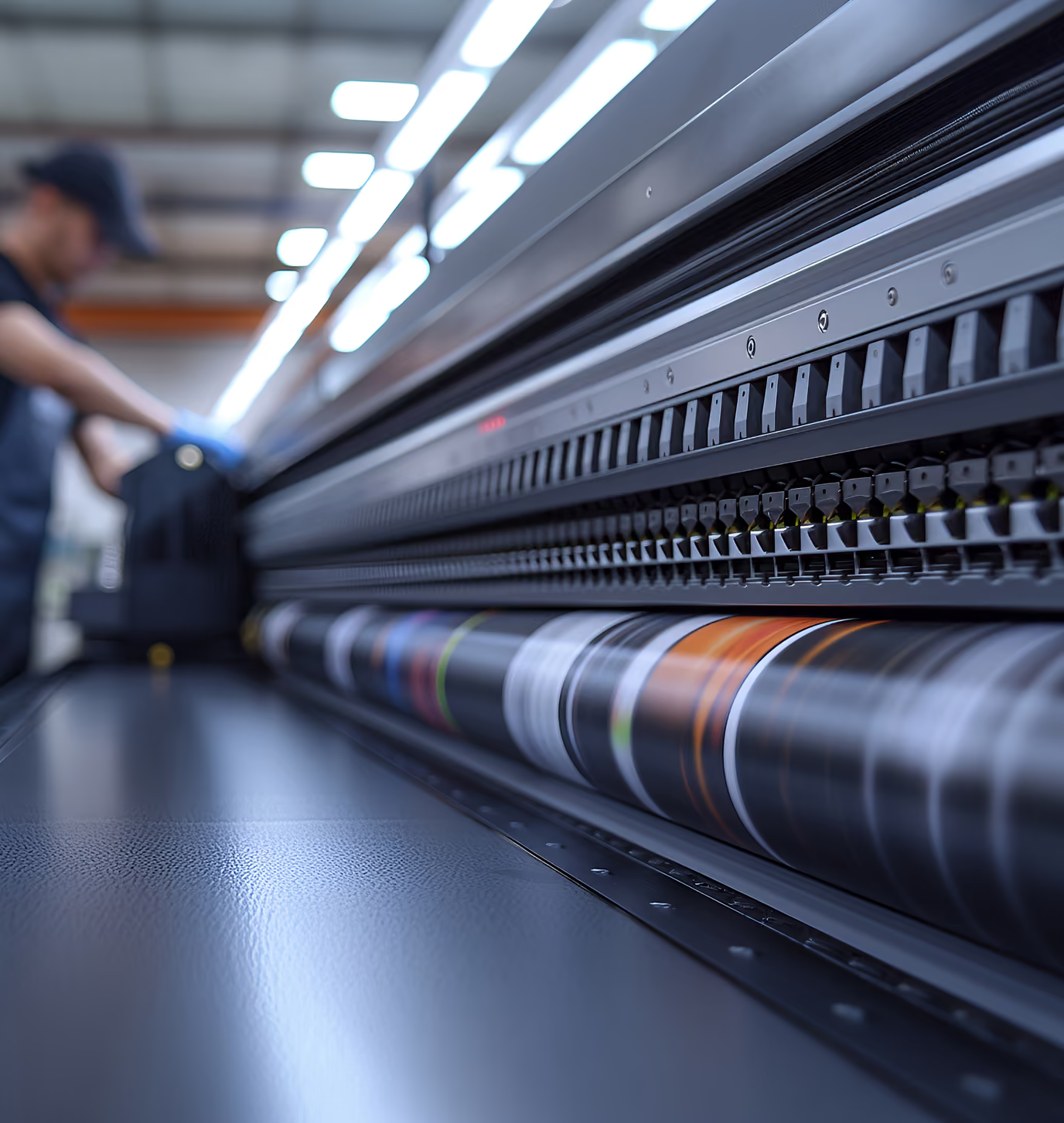
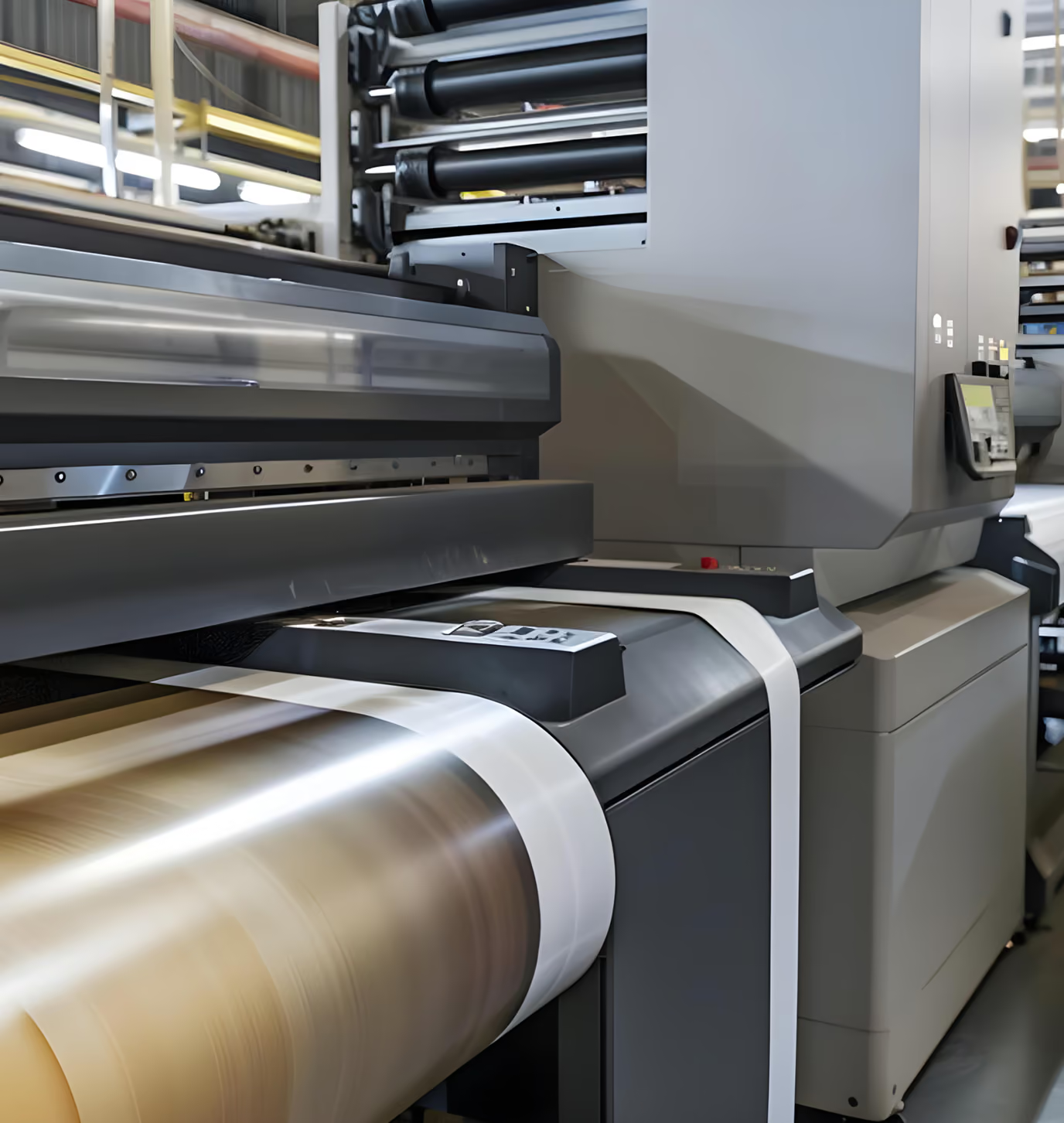
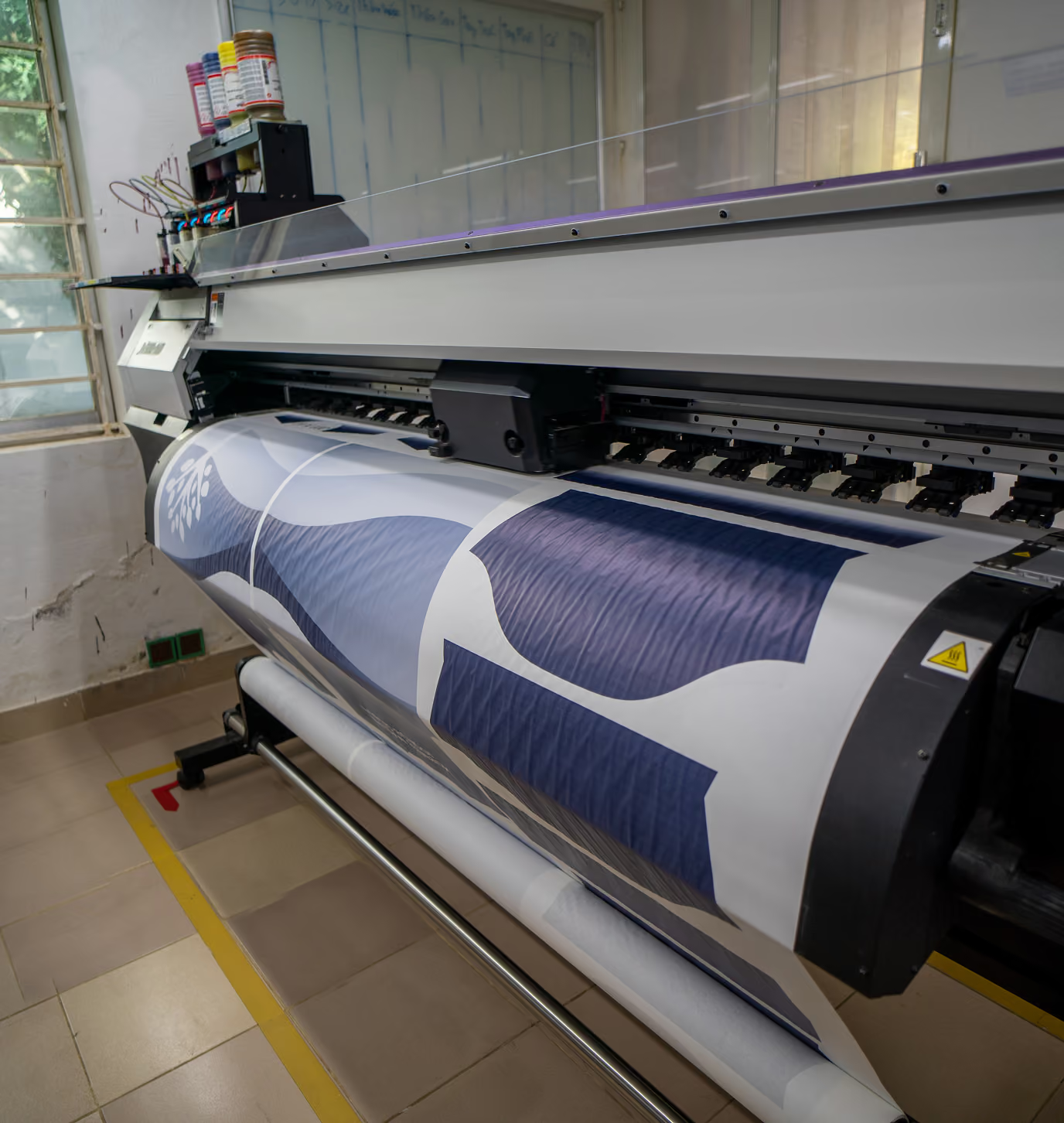
Leatherback’s HP Latex roll-to-roll press in the 120"-class width category is designed for high-volume, continuous production of flexible substrates in our large format division. Using water-based HP Latex inks with on-board curing, This press delivers vivid color, smooth gradients, and consistent image quality across very long print runs. The roll-to-roll architecture allows uninterrupted printing on extended media lengths, making it especially effective for applications such as billboards, wallcoverings, fence signage, banners, window films, and soft signage. Instant curing ensures prints are dry and ready for finishing immediately, reducing bottlenecks and enabling faster turnaround times.
Operationally, our HP Latex roll-to-roll press stands out from other large-format technologies— such as eco-solvent, UV roll, or flatbed presses—by combining production speed, media versatility, and workplace safety. This press supports a wide range of flexible substrates including PVC vinyl, textiles, papers, films, wallpapers, and specialty fabrics, often without requiring media-specific ink sets. Compared with UV roll printers, HP Latex presses offer greater elasticity for stretchable materials and soft signage, while avoiding brittle ink films. The HP Latex press wins on environmental performance by leading in faster finishing readiness, and reduced ventilation requirements, helping our company prioritize productivity and sustainability.
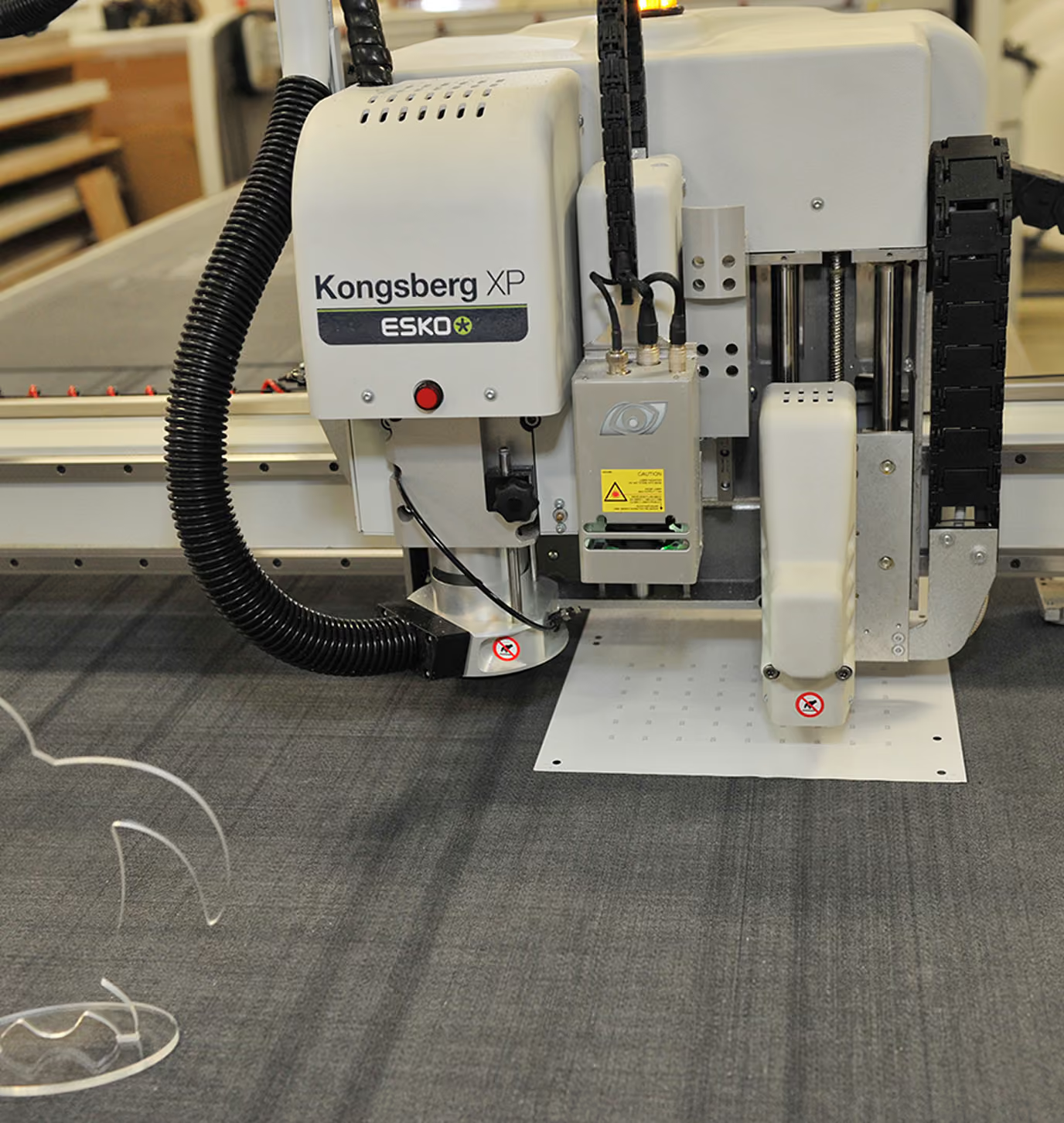
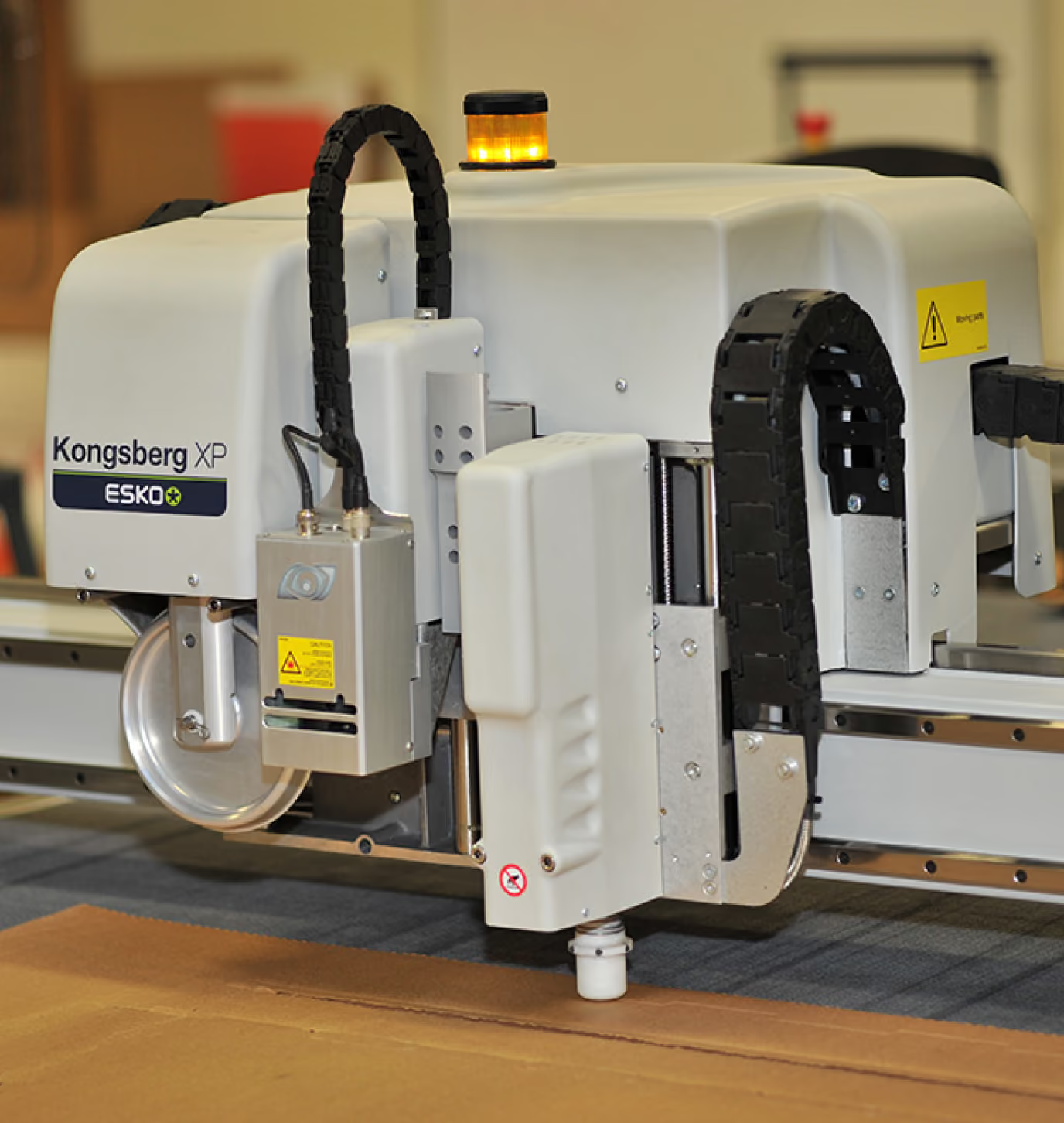
Leatherback’s Esko CNC table cutter is a digitally controlled finishing system designed to cut, crease, mill, route, and mark a wide range of print materials with extreme precision. Within our large format printing operations, it functions as a versatile finishing hub for packaging, signage, displays, and short-run production, handling substrates like corrugated board, folding carton, foam board, plastics, composites, rubber, textiles, and specialty papers. Unlike traditional guillotine cutters that are limited to straight cuts and stacked sheets, the Esko CNC table processes complex shapes, internal cutouts, contours, kiss-cuts, and creasing patterns directly from digital files. This enables rapid changeovers, prototype-to-production workflows, and accurate repeatability without the need for physical dies.
Operationally, Esko CNC tables stand apart from other large-format trimming equipment due to their modular tool heads and wide variability of bits and blades. Operators can switch between oscillating knives, drag knives, kiss-cut tools, V-cutters, creasing wheels, routing spindles, milling bits, and pen or camera tools—all on the same machine. This adaptability allows a single table to replace multiple finishing devices while maintaining tight tolerances across rigid and flexible materials of varying thickness. Compared with guillotine cutters, which excel at speed for straight edges but lack flexibility, and manual routing or die-cutting systems that require tooling investment, the Esko CNC table offers unmatched versatility, digital accuracy, and efficiency for modern commercial print environments like ours focused on customization and fast turnaround.
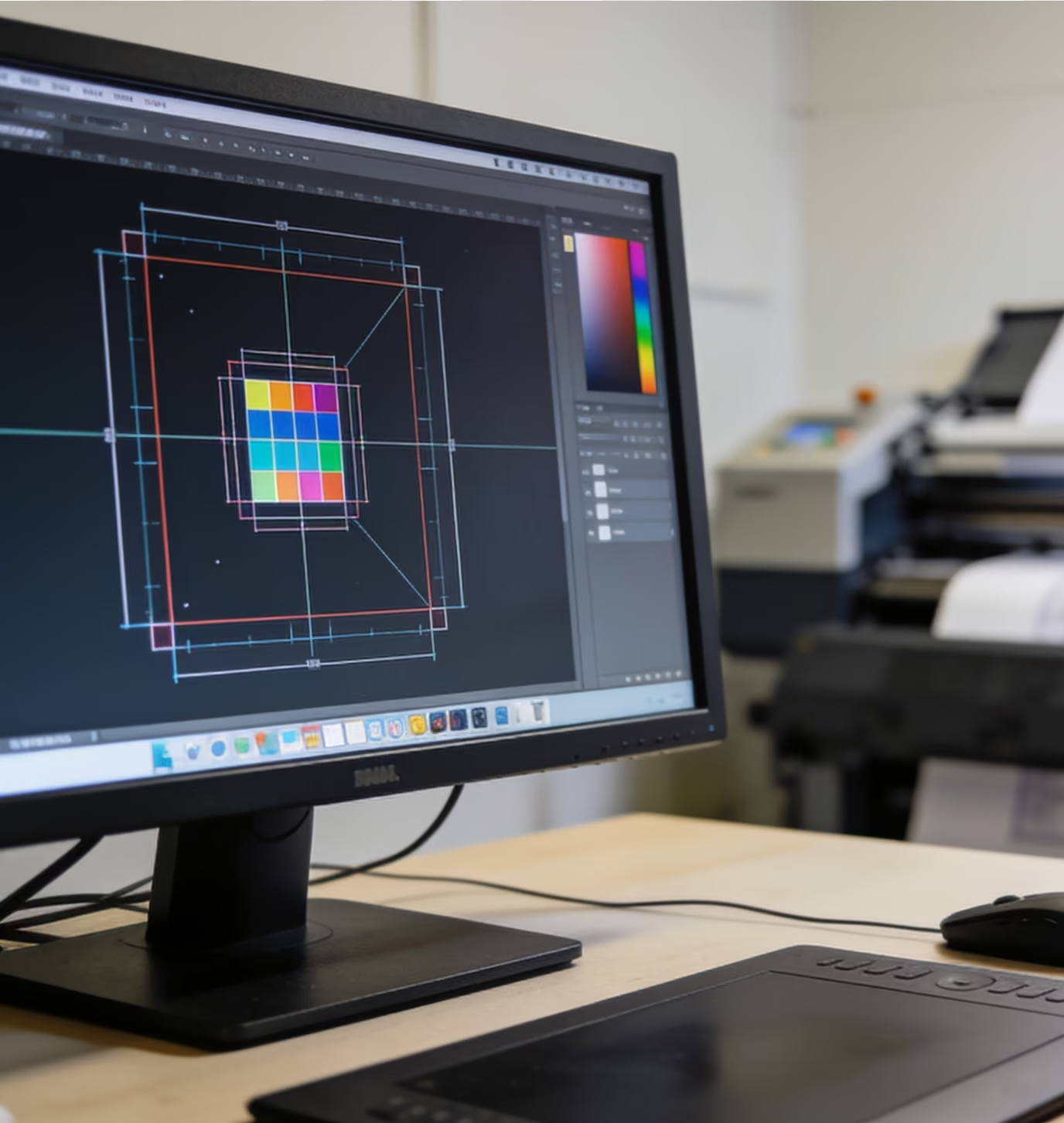
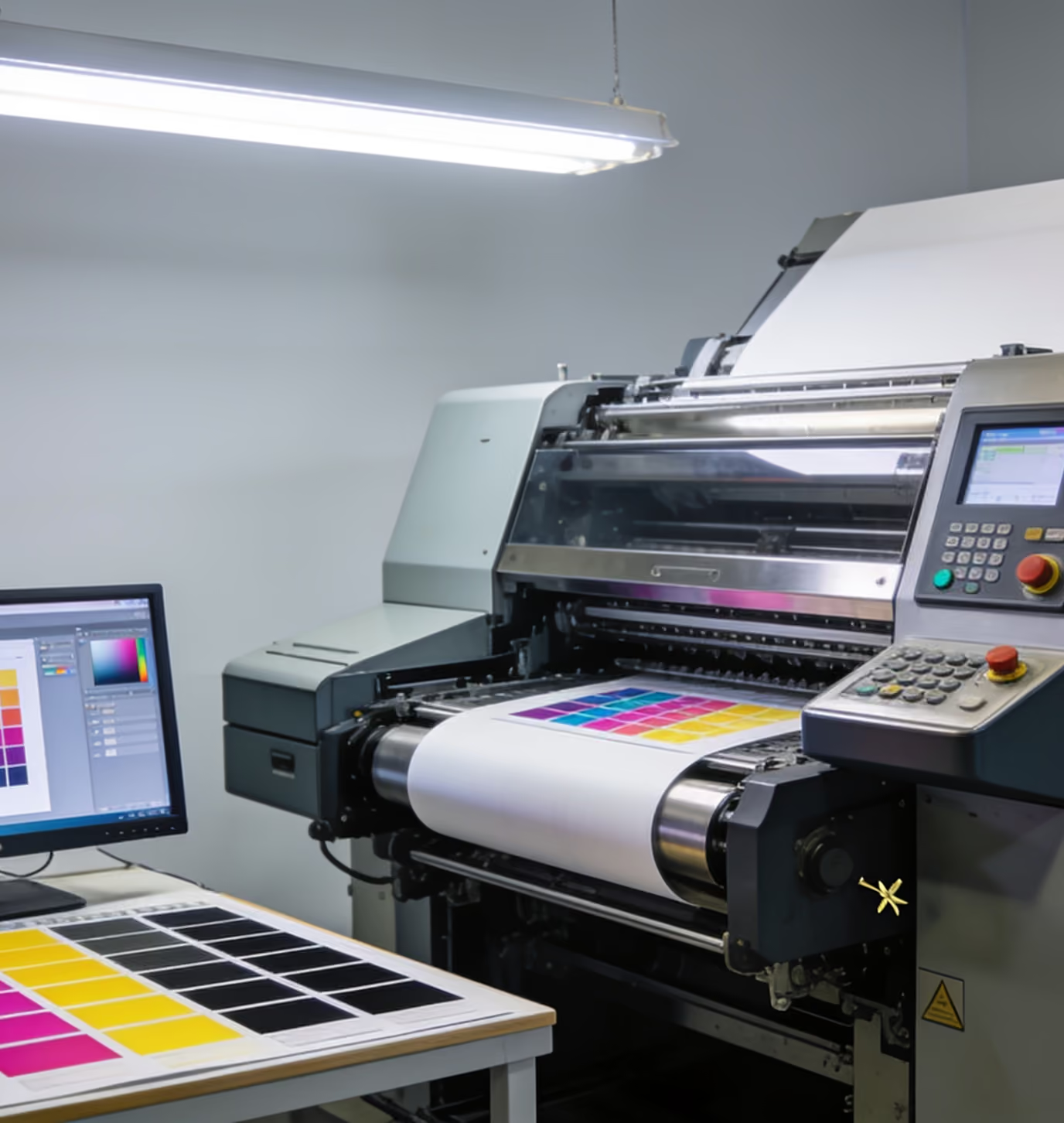
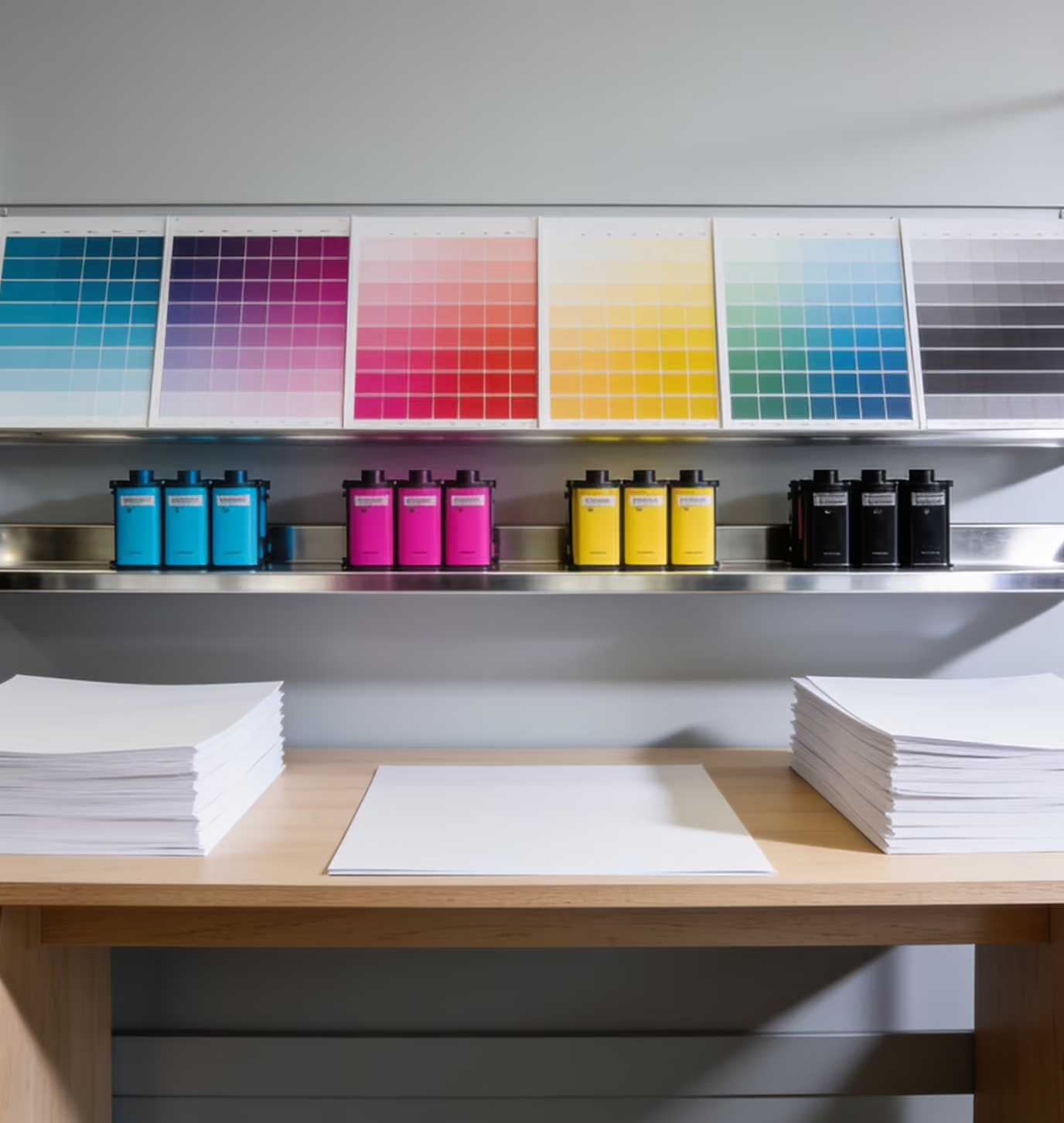
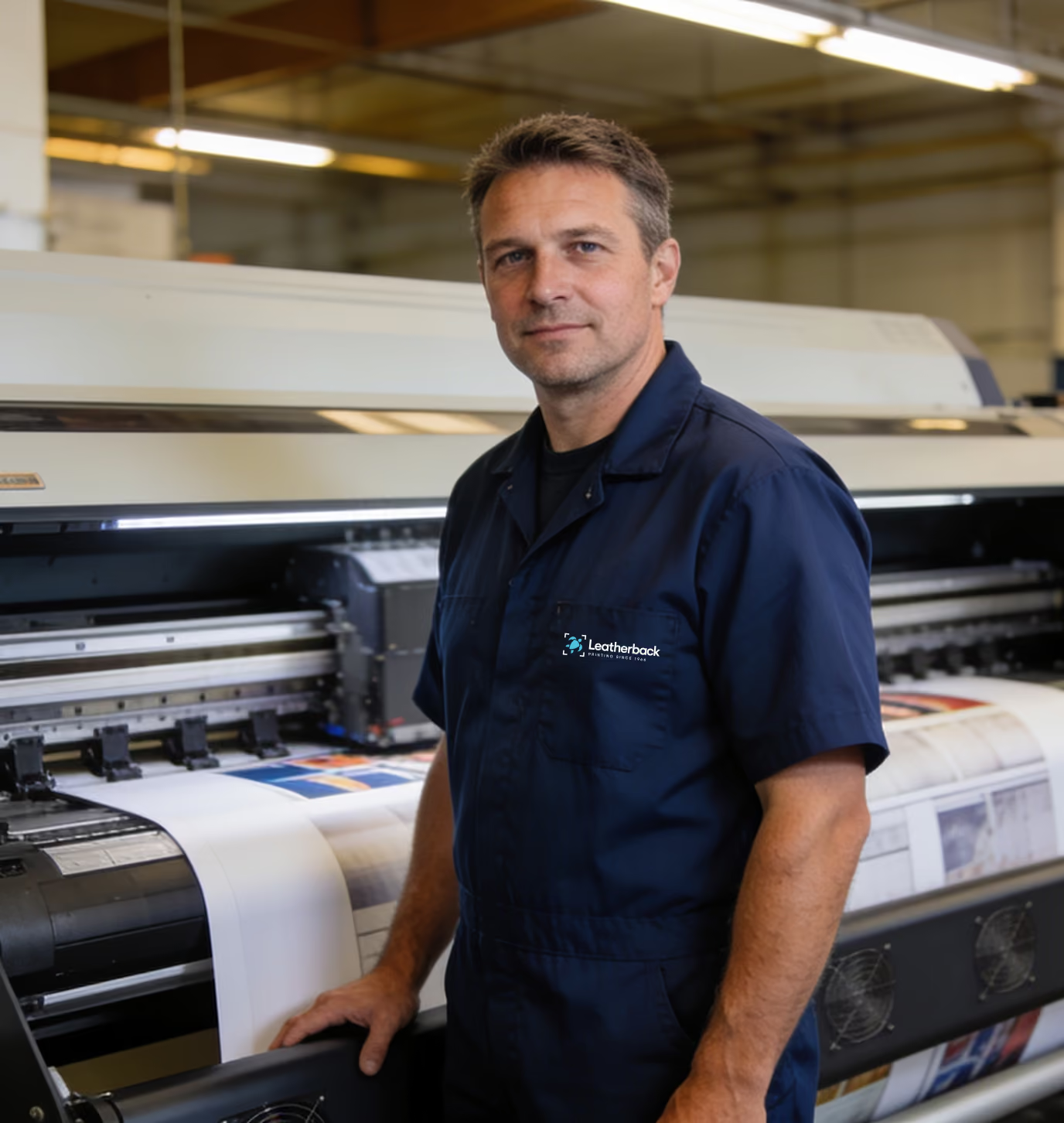
Leatherback, as a commercial printing company enables a color management process that is a controlled, end-to-end system designed to ensure that color remains accurate and consistent from design through final output. The workflow typically begins with monitor calibration and standardized color spaces (such as Pantone and CMYK profiles), followed by profiling each press, ink set, and substrate combination. Proofing—both soft proofing on calibrated displays and hard proofing on reference devices—is used to predict final output before production. By 2026 standardizing targets (for example, G7 and ISO standards), we can anchor all color decisions to measurable values rather than visual guesswork.
Leatherback also excels at maintaining color consistency across multiple press formats and substrates—such as flatbed UV, roll-to-roll latex, offset, and digital toner—requires cross-platform profiling and continuous verification. Different presses and materials absorb or reflect ink differently, so each requires its own profile while still aligning to a common color reference. Our press operators use spectrophotometers, control charts, and regular recalibration to minimize drift over time. This disciplined approach allows a brand color to remain visually consistent whether it is printed on vinyl, paperboard, fabric, or rigid signage, even when produced on different machines or at different locations.
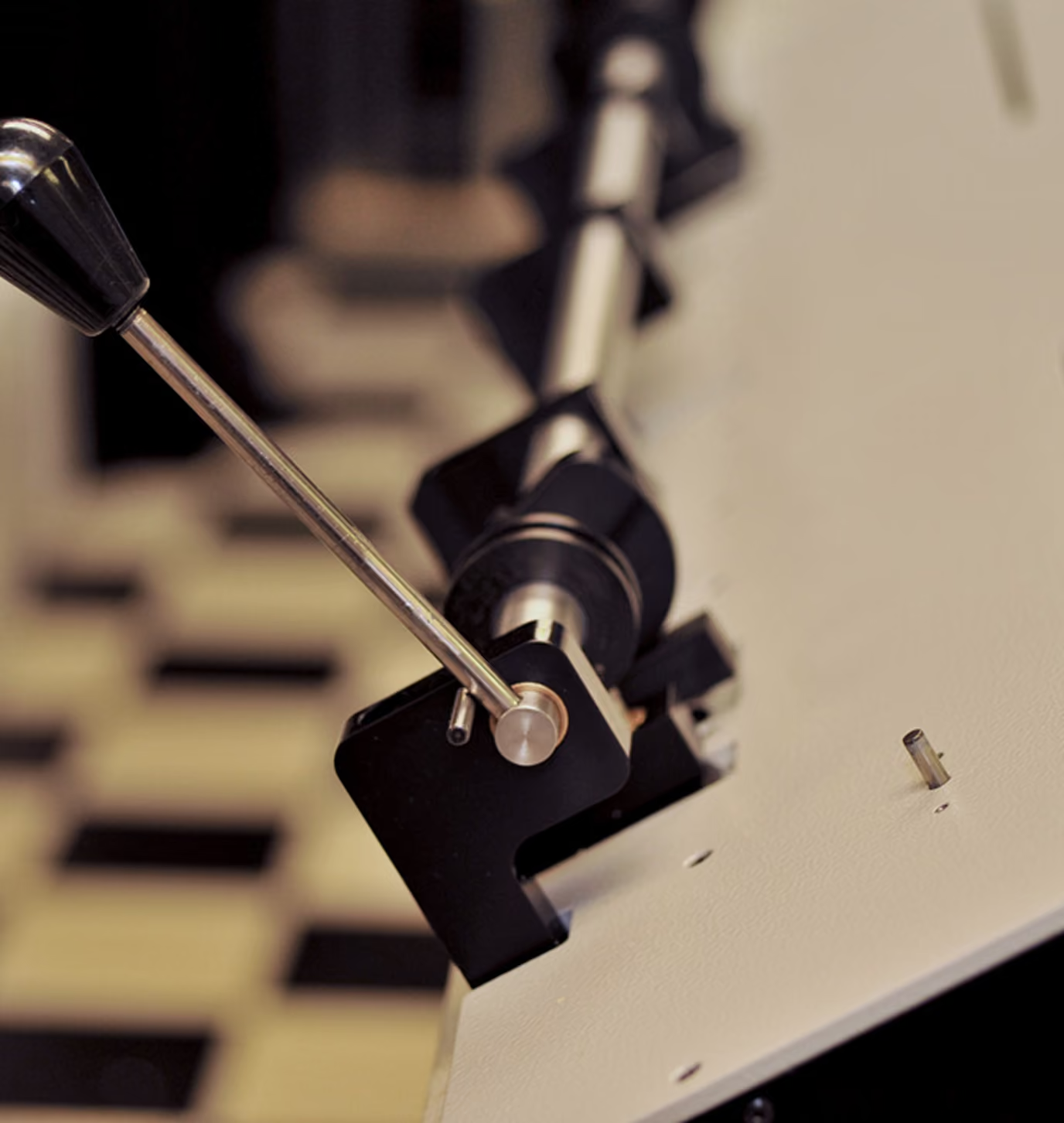
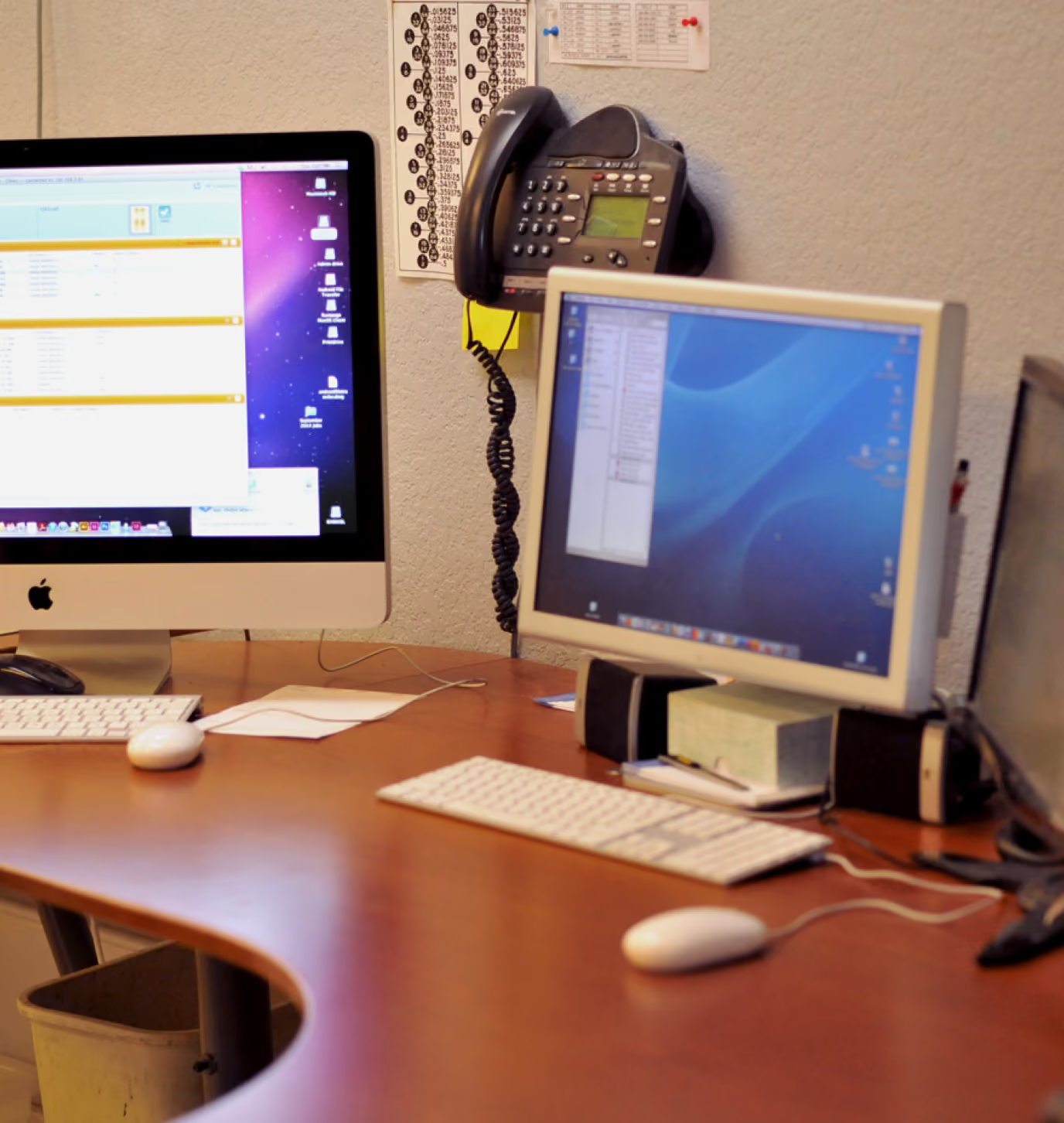
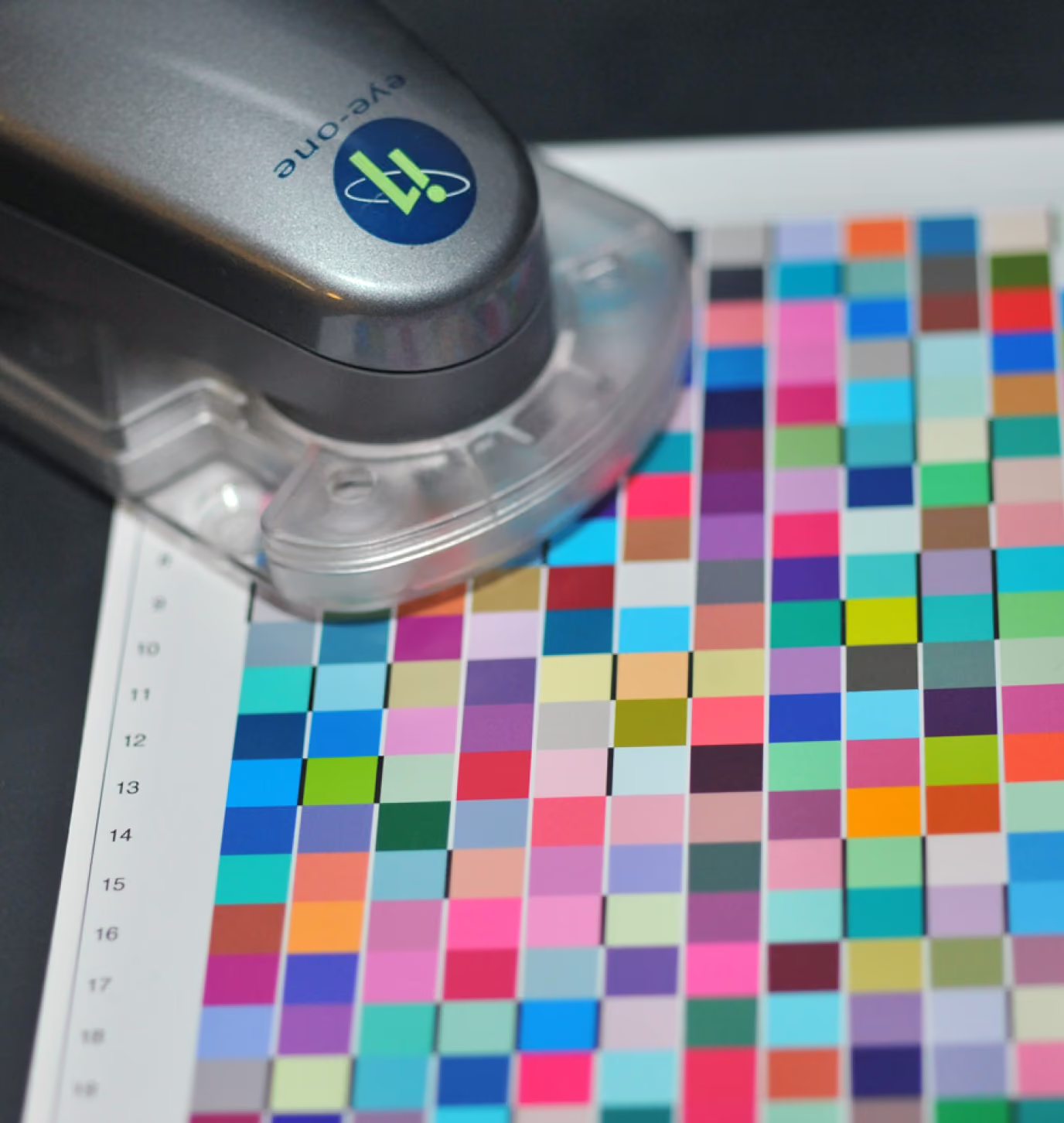
Leatherback’s prepress and simple design/editing processes ensure that customer files are production-ready before they ever reach a press. This workflow typically includes file intake, format normalization, resolution checks, font verification, bleed and trim setup, color space validation, and minor design edits such as text alignment, image corrections, or layout adjustments. Our prepress technicians use professional software to identify potential issues early—such as low-resolution images, incorrect color modes, or improper page sizing—so they can be corrected before printing. This step is critical to maintaining efficiency and avoiding costly downstream errors.
Proofing and accuracy are central to prepress operations. Soft proofs on calibrated monitors allow internal teams and clients to review layout, content, and color intent, while hard (printed) proofs provide a physical reference for color, scale, and finishing expectations. Client approval is typically required before production proceeds, locking in responsibility and ensuring mutual understanding of the final output. By confirming accuracy at the proofing stage, we strive to reduce reprints, minimize waste, and ensure that the finished product matches both creative intent and technical requirements across different presses and substrates.
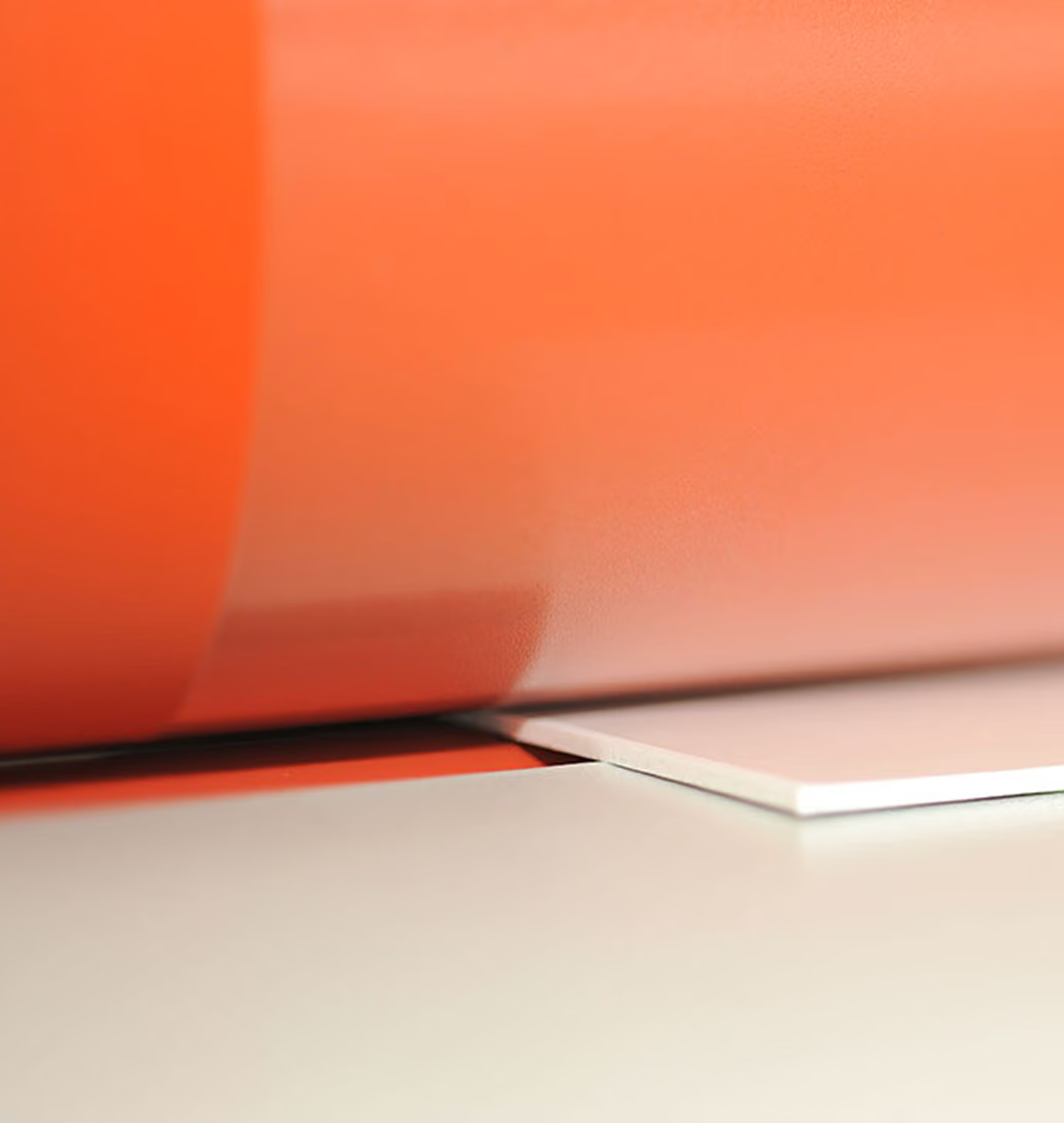
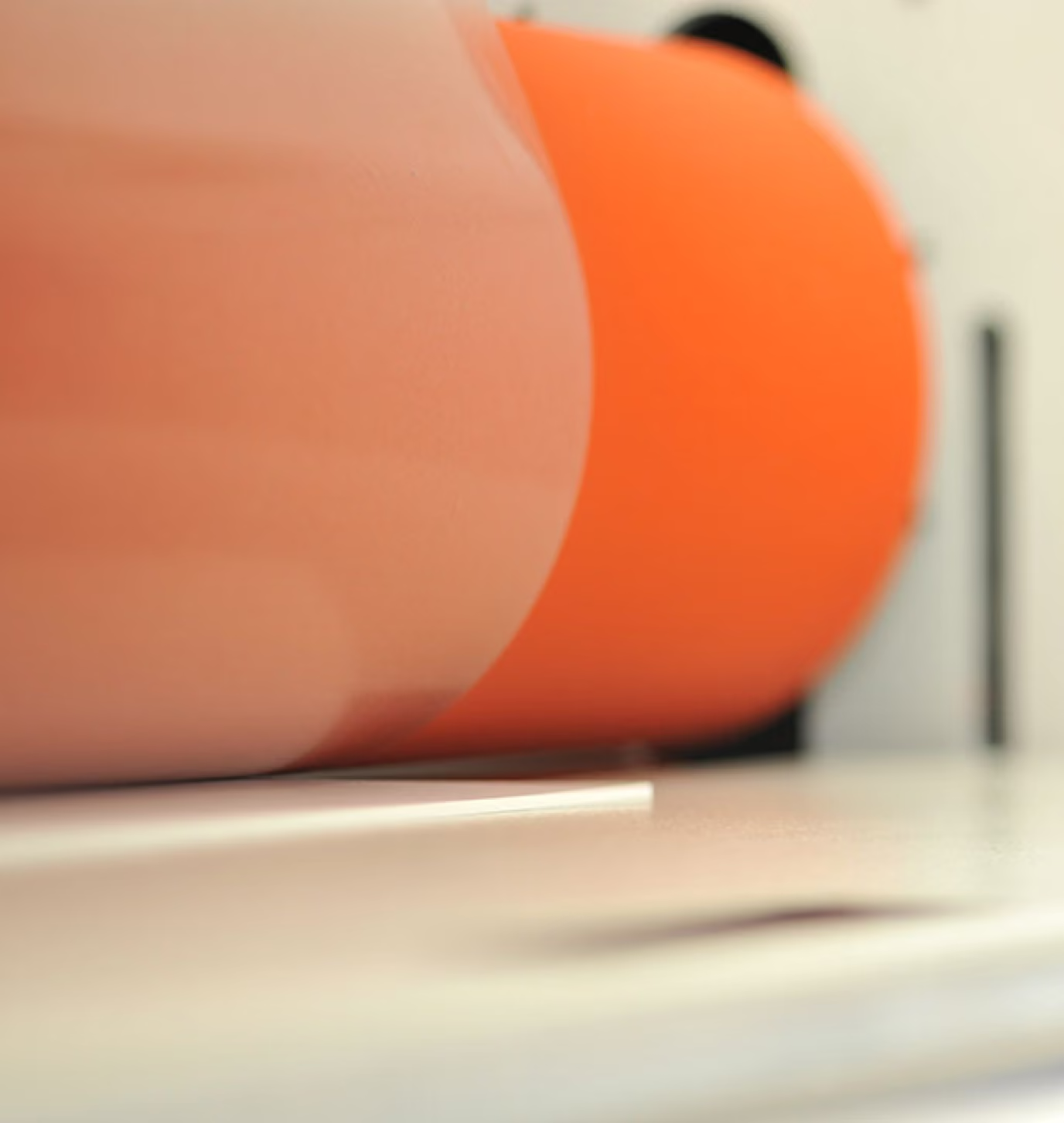
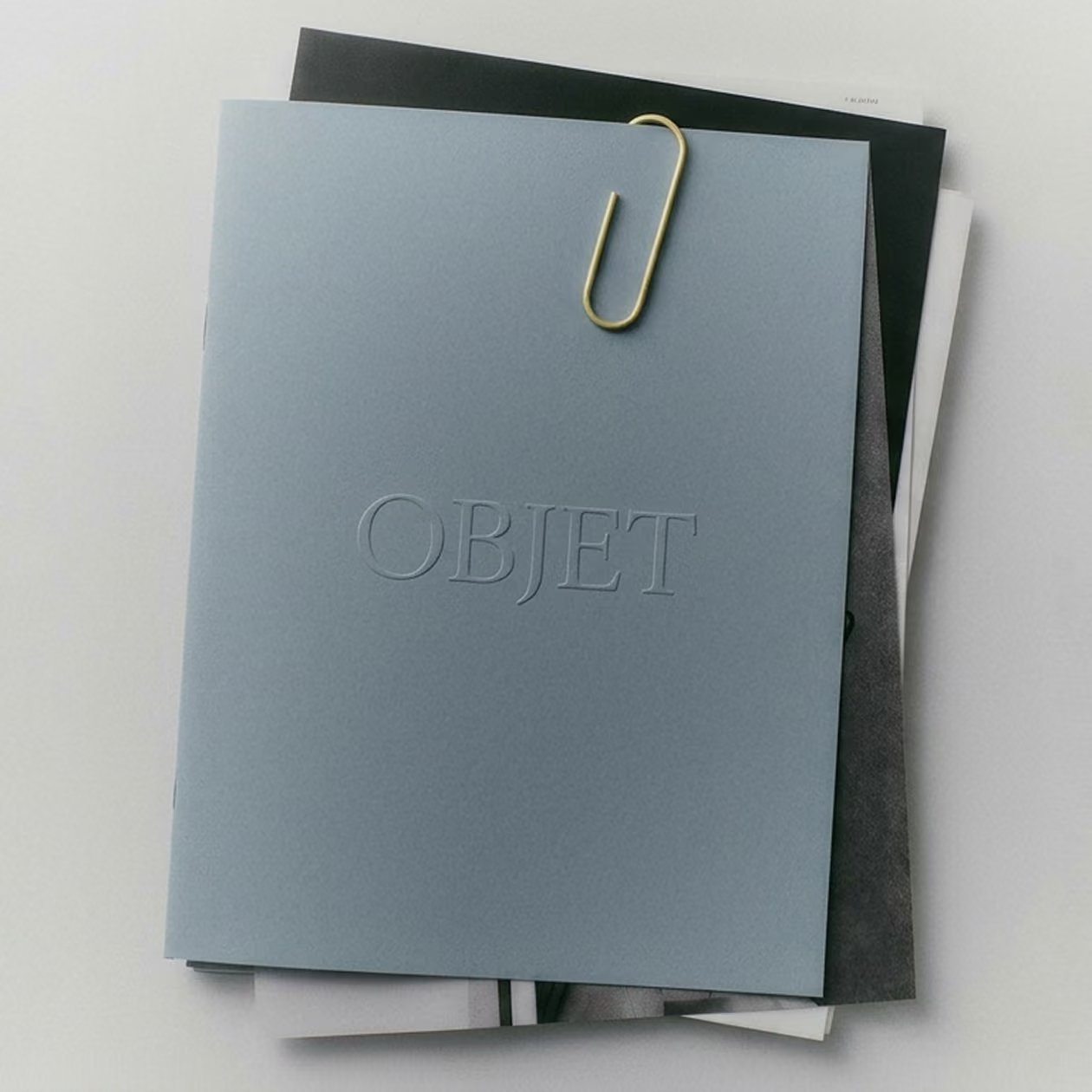
Leatherback offers a range of custom and specialty finishing options to elevate printed pieces beyond standard ink-on-paper results. Foil stamping applies metallic or pigmented foil (such as gold, silver, or holographic finishes) using heat and pressure, commonly used for logos, invitations, packaging, and premium covers to add reflectivity and visual impact. Embossing and debossing manipulate the substrate itself to create raised or recessed textures, adding tactile dimension and subtle sophistication to brand marks, patterns, or text. Spot UV coating selectively applies a high-gloss clear layer to specific areas—such as logos or images— creating contrast against matte backgrounds and drawing attention through light reflection and texture.
In addition to finishing techniques, specialty substrates expand how print can be used functionally and creatively. Soft-touch lamination adds a velvety, matte texture that enhances durability while creating a refined, sensory experience, often used for high-end brochures, covers, and packaging. Magnetic substrates allow printed pieces to be reusable and functional for calendars, promotional reminders, and point-of-sale items. Wood and wood-veneered substrates offer a natural, organic aesthetic suited for signage, décor, awards, or branded displays, especially where sustainability or craftsmanship is emphasized. By combining specialty finishes with unconventional materials, we can create memorable print products that stand out visually, physically, and emotionally.
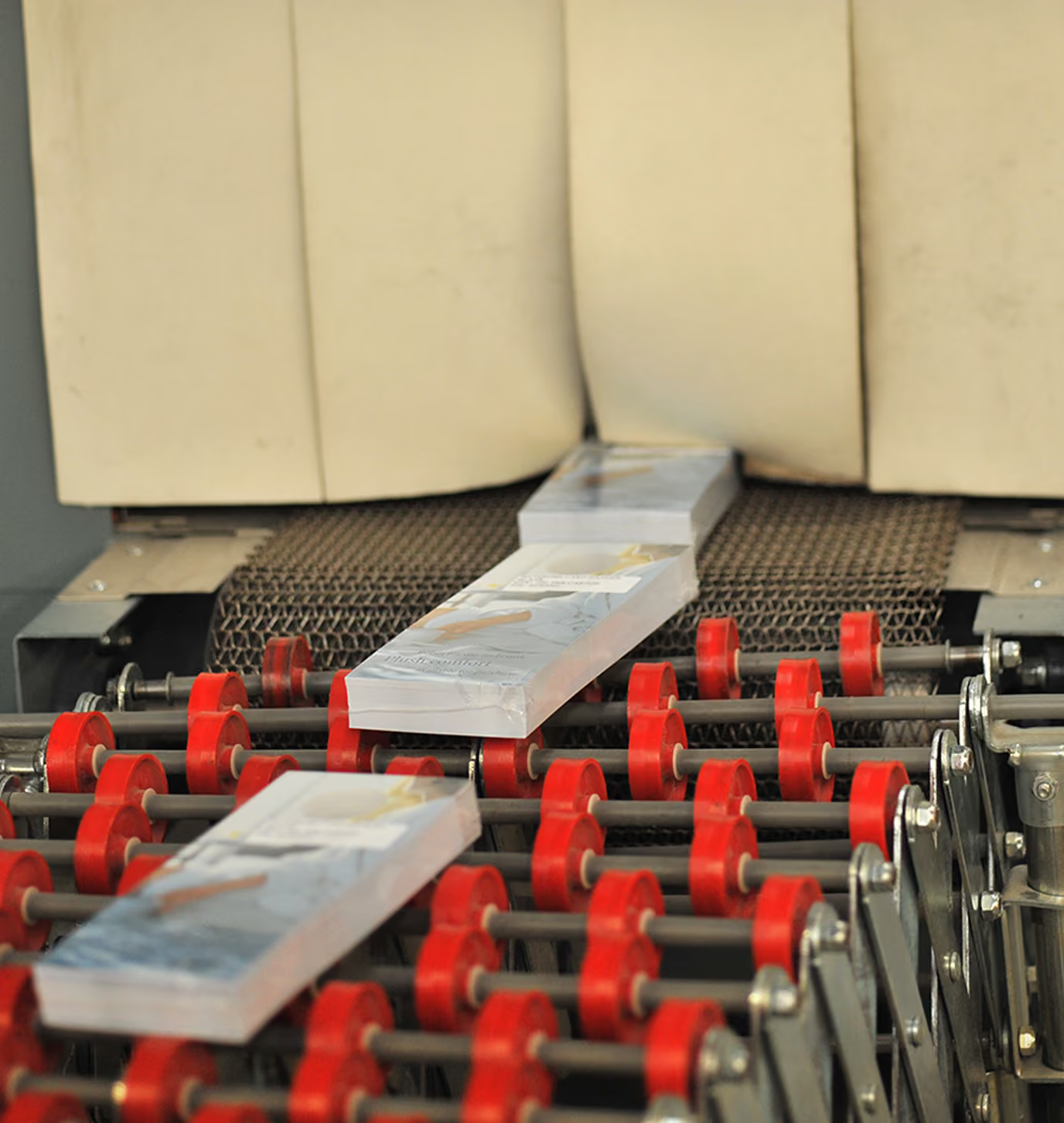
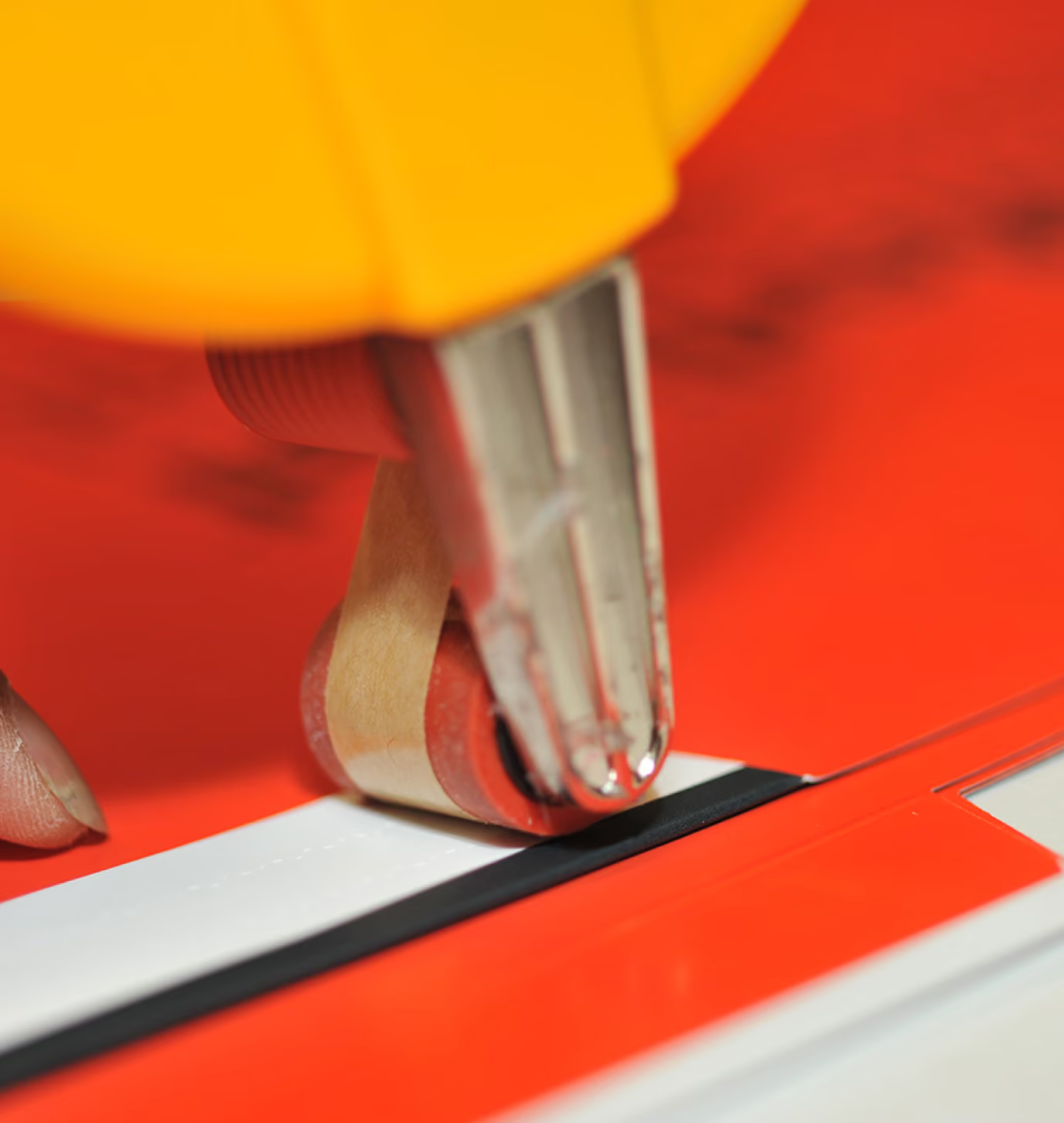
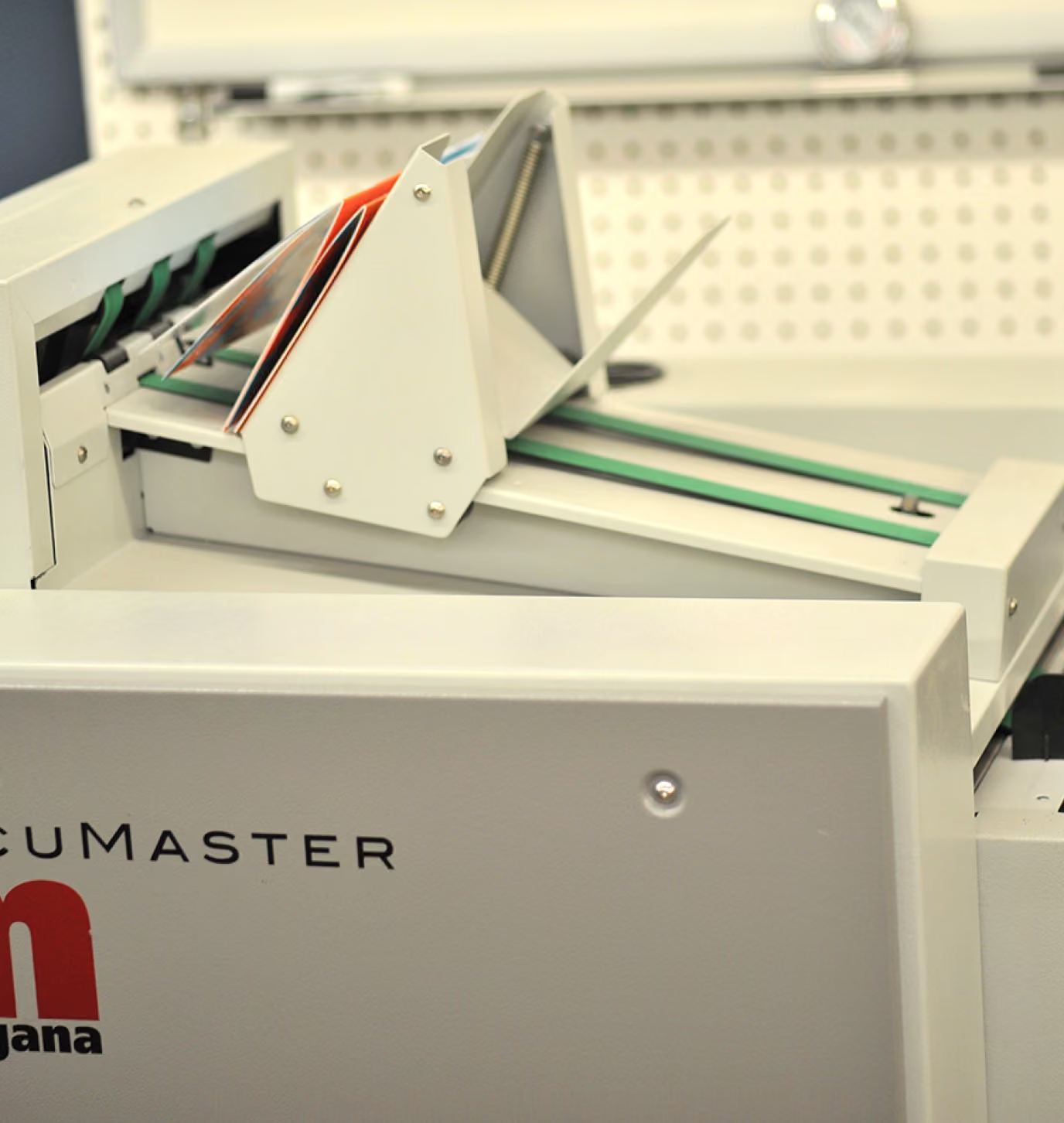
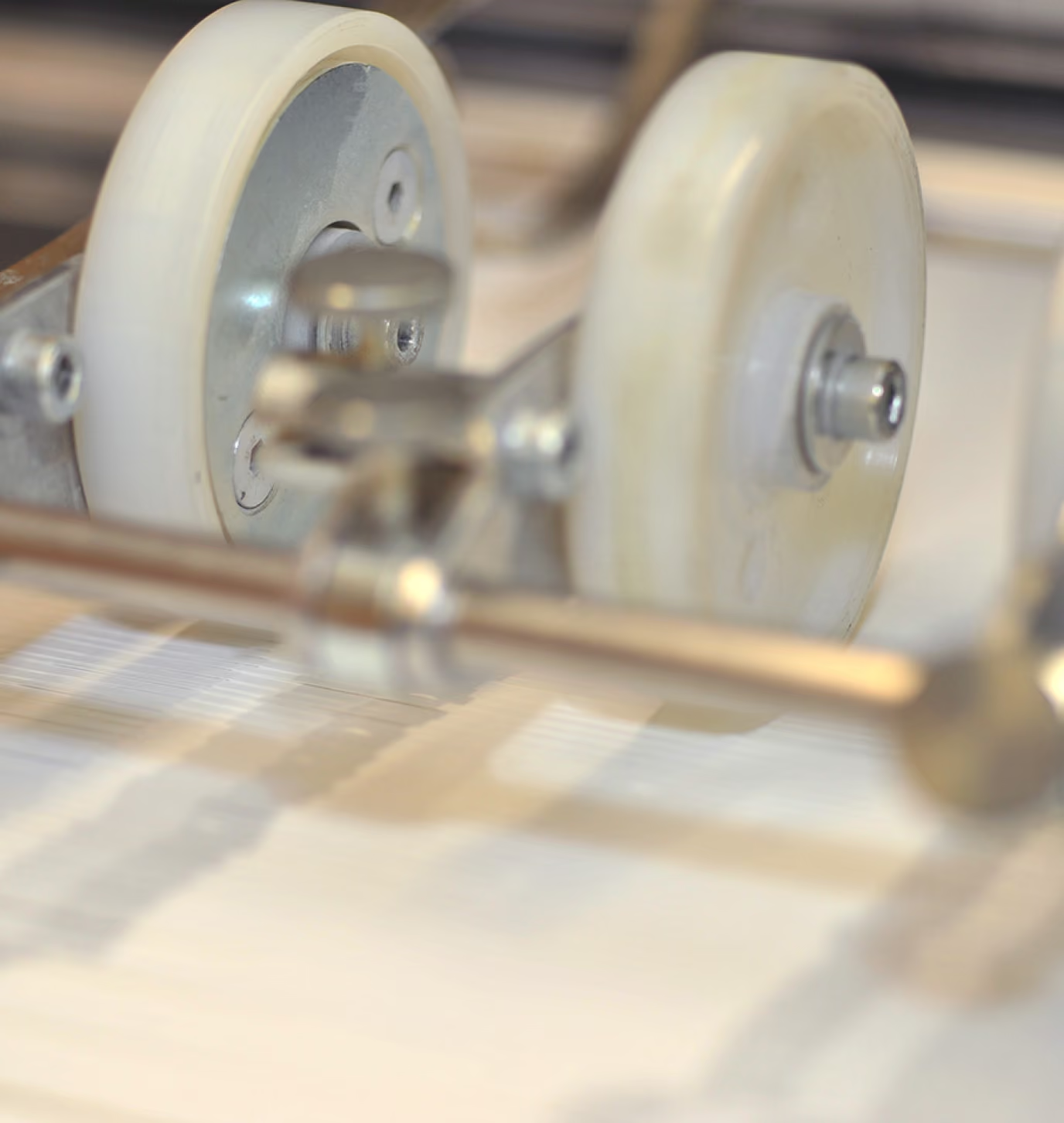
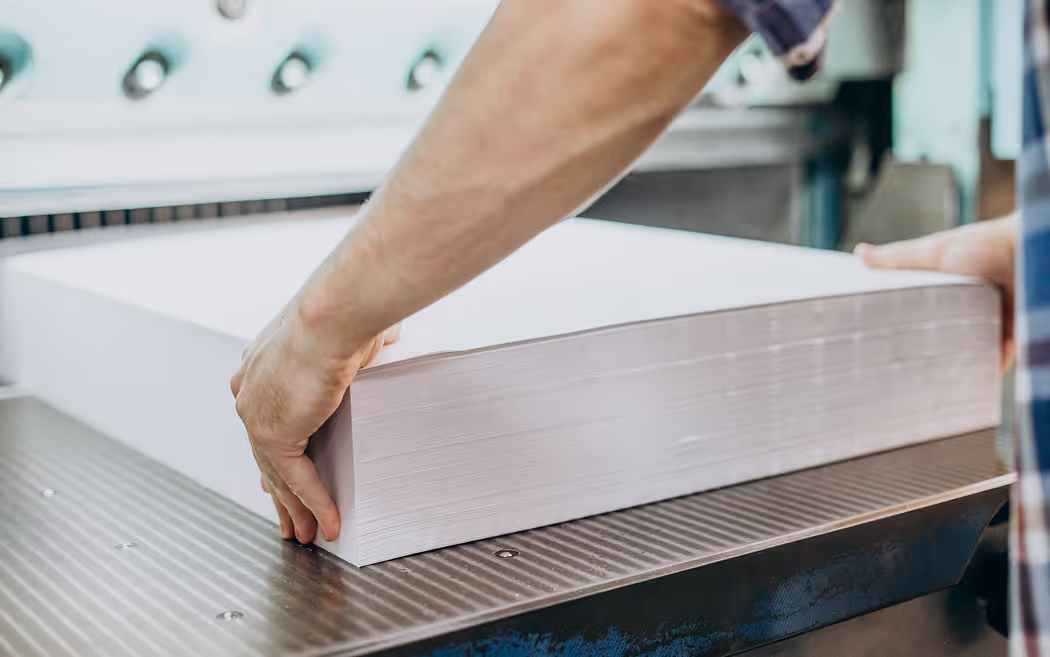
Commercial printing finishing equipment is used to transform printed sheets into final, customer-ready products through a series of mechanical and automated processes. After printing, materials may be scored to control folds without cracking, then folded into brochures, booklets, or mailers using automated folding machines. Die cutting creates custom shapes, 2026 windows, hang tags, or packaging components, while trimming ensures clean, accurate edges to final size. For multi-page products, stitching (often saddle-stitch or side-stitch) binds pages efficiently, commonly used for catalogs, programs, and magazines.
Once structural finishing is complete, shrink wrapping and bundling are used to protect printed materials during storage and shipping while presenting them in neat, count-controlled packages. Modern finishing equipment emphasizes accuracy, repeatability, and speed, allowing printers to maintain tight tolerances and consistent quality across large or short runs. Compared to manual finishing or outsourced processes, in-house finishing equipment gives us greater control over schedules, quality, and customization—especially for projects that combine multiple finishing steps or require fast turnaround.
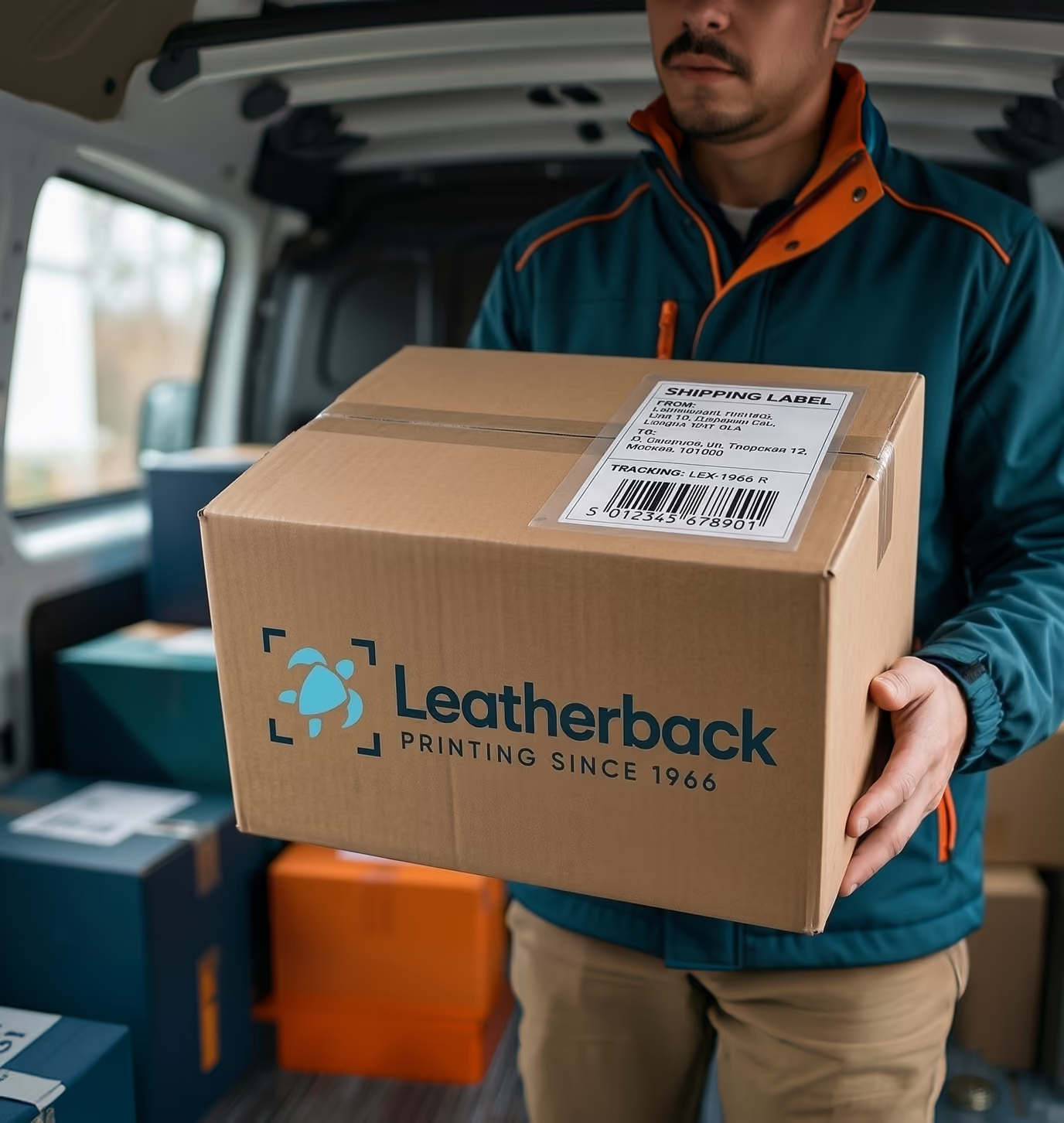
The fulfillment and shipping logistics division at Leatherback serves as the final operational link between production and delivery, ensuring printed materials arrive correctly assembled, protected, and on time. This group typically handles hand finishing tasks such as inserting, labeling, collating, assembling multi-component pieces, and kitting printed materials with other items (promotional pieces, manuals, samples, or hardware). Bundling and shrink wrapping help control quantities and protect products, while custom packaging—including cartons, padding, and pallets—is used to safeguard materials during transit. Having fulfillment integrated with production allows close coordination with finishing teams, reducing handling errors and maintaining quality control.
At Leatherback we ship products globally to fit our clients’ needs. Our competent shipping logistics team is essential to manage the wide range of delivery needs common in commercial printing, from small parcel shipments (UPS, FedEx, USPS) to LTL freight for pallets, oversized signage, or bulk marketing campaigns. Our logistics specialists select appropriate carriers, manage freight classifications, coordinate schedules, and track shipments to ensure cost efficiency and timely delivery nationwide. They also address compliance requirements such as labeling, manifests, damage prevention, and destination-specific instructions. By centralizing fulfillment and logistics in-house, we can maintain visibility, accountability, and flexibility throughout the entire lifecycle of a print project.
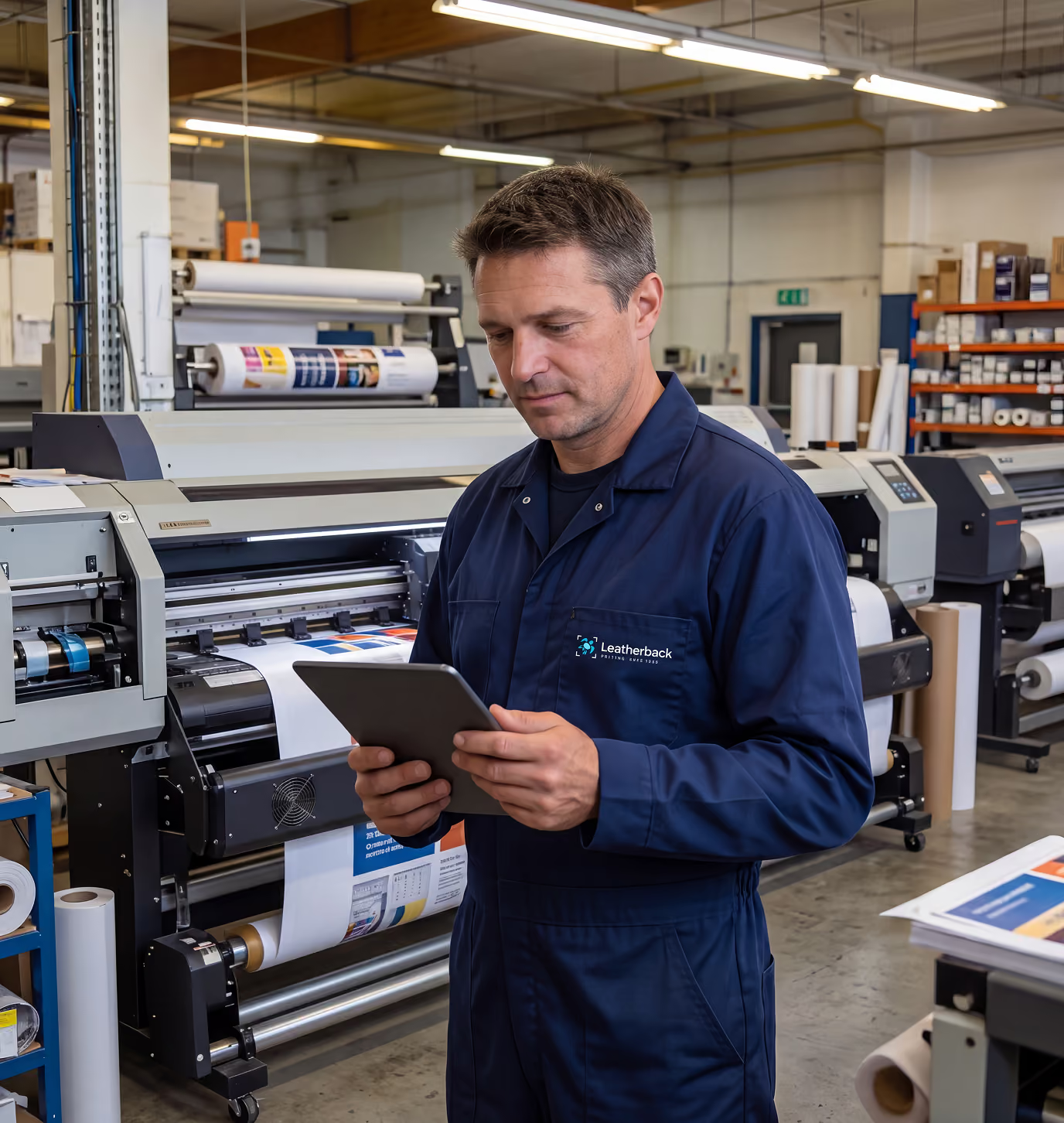
Leatherback’s inventory management system provides centralized control over printed materials, warehoused products, raw materials, and customer-specific stock programs. These systems track inventory levels in real time, allowing employees to monitor quantities received, produced, stored, and shipped. For fulfillment operations, the system enables accurate release orders, ensuring the correct products, versions, and quantities are picked, packed, and shipped to the right locations. Whether supporting marketing collateral, retail displays, manuals, or recurring corporate print programs, an inventory system helps eliminate manual tracking errors and provides visibility into available stock at any given time.
The system also supports accurate quantity controls and direct invoicing, which are critical for both operational efficiency and customer accountability. Automated inventory tracking records every transaction, including production additions, fulfillment releases, returns, adjustments, and shipments. This provides an auditable history that helps prevent shortages, overages, and miscounts. Integration with order management and accounting systems allows fulfillment activities to generate direct and accurate invoices, ensuring customers are billed only for products produced, stored, shipped, or consumed. By combining inventory, fulfillment, and billing data, Leatherback Printing can provide our clients with reliable reporting, improved forecasting, and better control over long-term print programs.
We consult early to understand your needs and review your files to prevent costly mistakes before production begins.
Our experts help you select substrates and ink that will perform perfectly in your retail environment.
With our diverse fleet of G7-certified equipment, we guarantee uncompromising brand color consistency across all your signage and packaging.
With our custom kitting and fulfillment, your materials arrive perfectly packed and ready for phased, multi-store rollouts.
Tell us about your project, and our team will help you plan the right production approach.